

Does your company share a common aim?
How do you know?
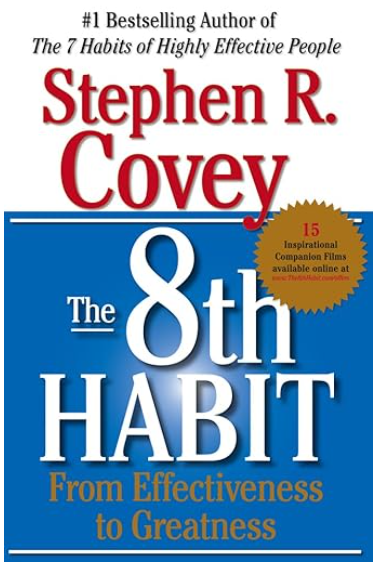
In The 8th Habit, Stephen Covey uses a soccer analogy to illustrate the devastating lack of alignment, trust, and purpose in modern workplaces.
Transposing statistics into an analogy:
He relates statistical workplace surveys to a hypothetical soccer match to show how disconnected employees often are from their company’s goals.
The metaphor translates the real-world polling data into a comical, yet tragic, soccer scenario:
Too many organizations lack a common and shared aim.
Without clear direction, these companies are subject to the soccer metaphor used in:
After polling 23,000 employees, Covey superimposes this metaphor over statistics:
The average organization, if it were a soccer team with 11 people:
- Only (4) four players would know which goal is theirs.
- Only (2) two players would care.
- Only (2) two players would which position they play and know exactly what they are supposed to do.
- All but (2) two players would, in some way, be competing against their own team members.
Why leave direction to chance
The Core Message (According to Google 06/2026)
The analogy demonstrates that having a group of talented people isn’t enough. Without a shared vision, a high-trust environment, and a clear understanding of the goal, the team’s energy is wasted in conflict and confusion.
The 8th Habit—Find your voice and inspire others to find theirs—aims to shift people from this state of blind confusion to one of passionate, united focus.
Here is to a unified team,
As Deming says: “Without an aim, there is no system.”
In all my years working in a wide ranging of industries, not one company ever had a clear, definitive aim we all shared. Think about this.
The list of potential aims is infinite… One person may be striving for client satisfaction. Another just wants to climb the corporate ladder by appeasing the boss. One may be financially driven, by sales, margin or profit.
If you doubt me: Go ask everyone in your organization:
What is the purpose of our business? What is our guiding philosophy? What business are we really in? Why are we trying to do here? What is our core long-term purpose?
My hunch: Everyone has a different answer.