

The deliverable: The tangible product:
Action/ Results Map:
Digital and Physical maps (navigational tools) for Jumpstarting Process Improvement!
We start with a map so everyone can see how your system operates. Mapping exposes the hidden structure beneath chaos. It shows, at a glance, how tasks, technology, people and processes come together to create value. Like a high-powered lens bringing the invisible into focus. Complexity gets broken down into clear, bite-sized pieces: Each one a critical task, milestone, or handoff. Clarity emerges. By working in low fidelity and stripping out the non-essential, maps reveal interdependencies, friction points and potential pathways, opening up a realm of possibilities and alternatives that were once invisible…
Get tangible results in one (1) Day
(Or six 6 virtual sessions)
NOW SERVING CHARLOTTESVILLE AND CENTRAL VIRGINIA!
Identify and Eliminate Bottlenecks:
🕐 30 Second Elevator Pitch (Formal):
I want to transform the way we do business in America by helping companies better leverage their human capital.
The first thing we do is what’s called a Process Triage: A fast, one-day, collaborative workshop helping teams map their process from lead to cash, identifying their bottlenecks, and building a practical, prioritized, bottom-up action plan.
This is a low-risk, high-impact, inclusive team building exercise, a shortcut method for achieving company goals, enhancing corporate culture and making work more fun and easier to do.
Basically, I just make the process visible, so it is easy to fix:
🎤 30 Second Elevator Pitch (Informal):
Most people think America is the entrepreneurial capital of the world,
But the truth is, the majority of our companies fail at a staggering rate.
I believe it is largely because we treat Employees like garbage.
All throughout society; we poison our companies with toxic cultures, convincing ourselves we are the epitome of productivity, innovation and customer experience…
When are you are ready to drop the veil and take a real, honest and unbiased look at Quality, waste and skyrocketing costs;
The first thing I will do is show you how I help local companies unlock 10-30% more capacity without hiring or hustling – in less than 8 hours.
“If the people doing the work inside your business are in pain, if they are struggling and having a hard time doing that work, they cannot produce high quality, high value work.” Derrick Mains, The Process Fixer
📝 Note: Operating Systems
If you have adopted EOS, you recognize how this relates to the fifth key component: Systematizing your business by identifying and documenting the company’s core processes. The step-by-step detail of the core processes, typically a process map and its best practices, fits into the EOS process component.
🎧 Alternative to Reading:
If you are dyslexic, hate reading, or otherwise learn better through other media, here is a link to a few Videos about the Process Triage® Method
The genesis behind it all:
🧭 Process Triage® Overview:
In today’s business world, most successful entrepreneurs and executives agree on one powerful truth: Unlocking the full potential of your human capital is essential to driving growth, innovation, and long-term success.
Imagine what your business could achieve if your team wasn’t just working hard, but working on the right things, in the right order, with complete alignment.

Human capital isn’t just about talent. It is about how that talent is focused, trained and moved into action. This is where Process Triage® comes in.
This a proven, fast-paced method helping your frontline team identify, prioritize, and resolve operational bottlenecks; without needing top-notch consultants telling them what they already know.
In just one day, your team walks away with a battle-ready improvement plan they build themselves, complete with practical fixes and empowering clarity.
When your team owns the process, they commit to it. Offering this workshop enables a safe setting for your staff members to:
- ✓ Rapidly Identify Process Issues:
- Your Frontline team surfaces dozens of process breakdowns, inefficiencies and workarounds; often the exact issues holding your business back
- ✓ Take Ownership of the Process:
- Rather than top-down directives, Process Triage empowers the people doing the work to define and solve their own problems. This builds deep buy-in, accountability, and commitment to execution.
- ✓ Create a Clear, Prioritized Action Plan:
- You leave with a ranked, actionable list of fixes (called “triage cards”) that target your most urgent process constraints: Ready to implement without months of analysis or outside consulting.
- ✓ Improve Cross-Functional Alignment:
- Process Triage brings together people across departments, breaking down silos and helping everyone see how their work fits into the larger process. This builds shared understanding and collaboration.
- ✓ Scale and Execute Faster:
- By fixing what is broken and refining what is already working, Process Triage improves operational flow; so your business can grow faster, more profitably, and with less chaos.
- ✓ Create a Culture of Continual Improvement:
- Triage sessions teach your team how to think in terms of systems, spot problems early, and take initiative; laying the foundation for an ongoing improvement mindset.
First, make sure you qualify: Be certain this method right for you. For now, keep reading. Then,
When you are ready to unleash the full potential of your team, simply contact me (call, text or email) to schedule an introductory call and/or a workshop.
- If you live in Central Virginia, Talk to Parker! Call or text me direct at 434.409.9081. If you prefer, email me at [email protected]
- Otherwise, consult with Derrick Mains at https://theprocessfixer.com/
Procrastination costs money. Every day your team works around broken processes, you lose time, money, and morale. The longer inefficiencies go unaddressed, the more they compound; dragging down performance, frustrating your people; slowing growth.
With shifting markets, tighter margins, and increased pressure to do more with less, there has never been a greater need for clarity, alignment, and speed. A Process Triage workshop delivers all three: Fast. So the real question is:
Can you afford to keep waiting? Before you get distracted: Schedule your workshop right now!
(Skip to) Table of Contents:
- Overview
- Introduction
- The Theory
- Warning & illustration
- What is Process Triage?
- Origin Story
- Summary & FAQs
- Ideal Clients
- Essential Traits
- Buying Criteria
- Key Benefits
- The Power of Maps
- Why Employers and Executives Love it
- One Alternative
- Listening is Leading (examples)
- Your Aim
- Remember
- Positive Mental Attitude
- Leverage People
- Be Their Hero
- Emissary
- Teamwork
- The Reason Why
- Departmental Requirements
- Best Practice
- Keep in Mind
- The Challenge
- Ideal Scenario
- Quick Note About Clients
- Your Organization
- Optimizing Your Capacity
- Power of Visibility
- Responsibilities
- Pain Points
- Why Employees Love It
- Risk of Demotivated Staff
- Benefits to Employee (continued)
- Why I Love it. My Reason Why
- Why Work With Me
- My Aim (Extended)
- Hospitality
- Objections
- Guaranty
- What to Expect During a Workshop
- In Closing
- Schedule a Discovery Call:
If you are going to solve problems at their root cause, why would you not start where the pain is? Why would you not start in the place that you are going to get the least amount of resistance? Where people are going to embrace you? Where they are going to say “I want to be a part of this” because it is helping me. (It is also helping the company, you, the client, even the community.)
📘 Introduction:
Every organization (large or small, public or private, in every industry) has friction, pain, inefficiencies, problems, bottlenecks, frustrations: Whatever you call them, they are:
Gaps between where you are and where you want to be…
What are you doing to close this gap?

Do you proactively seek change? Ironically, processes cannot tolerate much tinkering because changes force them to stop and start over, defeating their purpose. How else do you continually improve?
“In all affairs, it is a healthy thing now and then to hand a question mark on the things you have long taken for granted.” Bertrand Russell
📐 The Theory:
To go from Chaos to Clarity, from Frustration to Innovation, you must first understand:
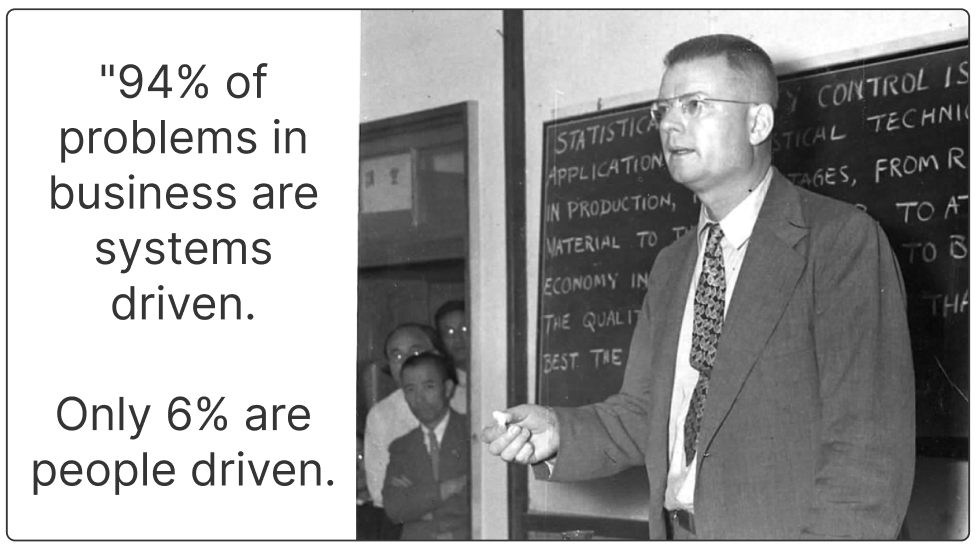
94% of U.S. organizations operate in a manner where management are the thinkers and employees are the doers. However,
This outdated model stifles innovation, limits engagement, and ignores the vast potential of frontline insights to improve systems in order to drive meaningful change.

What is the quickest and most expedient way to close the “Gap?”
Engage your front line staff in the process of improving it:
Who else can advise you better than the people actually doing the work?
Process Triaging is a powerful way of keeping an organization and its essential processes in a state of continual improvement. It diagnosis process problems and sorts their solutions in a way that ensures everyone is focused on the right fixes in the right order.
“The fastest way to improve a process is to triage it with the people who run it.”
⚠️ Warning & illustration:

Why should you engage your people?
Aside from the fact that the free exploring mind of the individual human being is the most valuable thing in the world, let me pose:
A cautionary tale from Derrick Mains, aka The Process Fixer:
“Years ago I did some consulting for one of the biggest companies in the world. They were receiving product (a consumable good) from a supplier in high volume. Occasionally (less than 1 in 1000) we would receive a box of material that was short, empty or damaged. This was unacceptable. So,
My client went to the manufacturer saying “You need to figure this out. You need to design better capability; we cannot afford bad product.”
So the manufacturer hired a major consultant in the likeness of McKinsey & Company and Gartner.
They attacked the problem by making a huge monstrosity of a machine that would sit on the production line. It would kick product off of the line if it was not the exact weight. Simple solution, right? Well;
They spent millions of dollars engineering this technology… And soon discovered:
This instrument was a break point: It would give out regularly, shutting down the line. Eventually they had to bring a whole team of consultants, engineers and executives together to walk the line. Note:
This was first time anybody actually walked out there and saw what was happening! Imagine that.
As they were doing this they came across a gentleman standing beside a large box fan running on high, pointing towards the line. One of the consultants asked “What are you hot or something?” The guy says:
“No. Some idiot made a big machine that supposedly kicks the lighter stuff off the line. But, it is always is broken. So we went across the street and bought an $8 box fan from the Dollar General. It sits here and blows all the stuff we don’t want right off the side because it is too light.”
Meanwhile, there are 40 consultants and executives standing there scratching their heads feeling totally embarrassed. They spent millions of dollars analyzing the problem and designing its solution… All the while, if they had just asked the people doing the work, they would have been advised to buy a $8 box fan!

The Moral:
The solutions are there. They are in the heads of the people doing the work.“
“It is not enough to do your best. You must know what to do, and then do your best.” W. Edwards Deming
🩺 What is Process Triage?
Process Triage, Discovery Day, Intent Day, Planning Day or according to Strategic Coach (Dan Sullivan); a Buffer Day:
Call it whatever you want: This is a method for leveraging your human capital.
The founder (Joseph “Rosie” Rosenberger) calls it Process Triage.

Triage defined:
- Noun: The preliminary assessment of patients or casualties (in our case; problems) in order to determine the urgency of their need for treatment and the nature of treatment required.
- Verb: Conduct a preliminary assessment of patients or casualties (in our case; problems) in order to determine the urgency of their need for treatment and the nature of treatment required.
- In our context: Triage is a term referring to the assignment of priority levels to tasks or individuals to determine the most effective order in which to deal with them.
Triaging is French for ‘to sort’ (bottlenecks holding the company back).
It is incremental, tactical process improvement
“All of us is Smarter than any of us” Douglas Merrill
🎯 The Goal:
Empowering frontline teams to improve operations by surfacing real problems and creating actionable solutions in a fast-paced session, often in just one day.
This is optimization through collaboration. It is a method for building repeatable, sustainable, and scalable core processes in your business.
We block out the noise and show the interconnectivity between results and the system they form so we can begin the process of synthesizing insights into a single strategic theme.
Process Triage is a structured, facilitated workshop method designed to identify and prioritize process issues within a team or organization.
We call this issue processing.
“You don’t need to work harder. You just need to remove what’s breaking your momentum.” Widely shared systems-based mindset
📖 Origin Story:
Rosie Rosenberger was employed by the Sprint Corporation when they got sideways with Wall Street. Sprint was not going to hit their numbers and neglected to warn Wall Street – who got upset and demanded they fix their P&L ratio (by any means necessary).
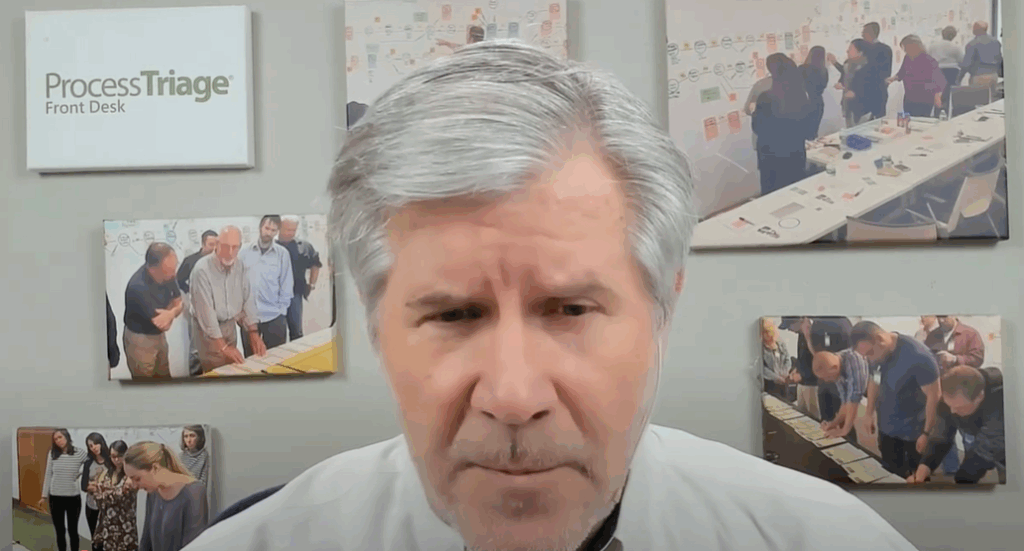
Rosie’s boss and close friend in network operations was tasked with finding $200 million somewhere. While struggling to find a solution, Rosie woke up at 3:00 in the morning with a “Do This” that he credits to God.
“I would love to claim it was all me. But sometimes you solve problems in your sleep, in your unconscious. Go to bed with a problem on your mind, and don’t be surprised if you wake up with something to do about it.”
The idea involved getting their team together and first mapping out their process. Then, asking;
“What do you think we ought to do?”
“One of the things that we see in our work regularly are these BIG ISSUES that flame up at the Executive Level and we really track them back. We find that it is many times something very, very simple on the frontline of the organization, like an address print from the ERP system, which created a delivery problem that got delivered late and at the wrong site. These little problems can escalate quickly, all because of a simple problem right out front that could have been resolved quite easily if people were allowed to think.” Derrick Mains, The Process Fixer
❗ The Problem/ Opportunity:
No one saw the whole process end to end.
(Semi-related picture of a fishbone diagram, a visual tool used for root cause analysis and problem solving.)
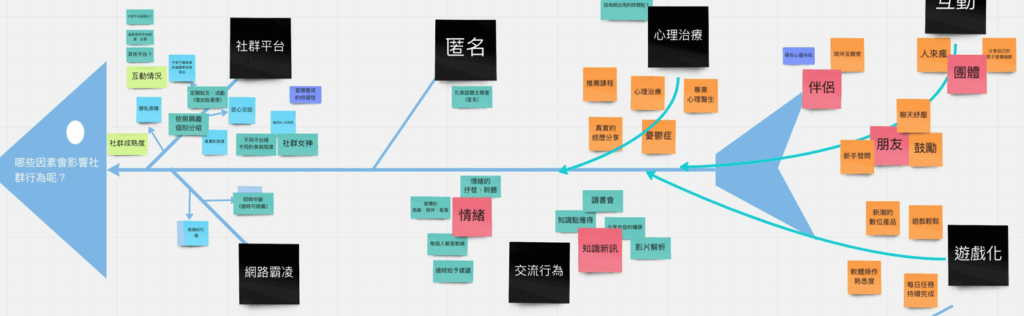
Their main product was a large circuit that produced free cash flow. This was a cash cow when it sold because they would rent it out for $5000 a month. However, these circuits were complicated to design because they had to be coordinated across the entire country.
After calling the team together and asking how it works, we discovered no one knew the whole process. Not a single person could describe the process from sales order submitted through the final billing? A few knew a lot of it, but no single personal knew all the details. So we mapped it out. Then, we asked:
How long does this process take? Sales knew the timeline because they made the initial request and received the commission: 32 days.
With the entire process illustrated, the next logical question:
If you had everything you needed, working uninterrupted, step by step, how long would it take? They could only find 91 minutes of work!
“If you cannot describe what you are doing as a process, you do not know what you are doing.” W. Edwards Deming
There are reasons for the delays and interruption. This could be short supply, pressing orders, rework, multitasking, etc. However:
When you improve the flow, you improve capacity, productivity and output.
🤔 The Irony:
Everyone was hustling and putting forth their best effort.

Managers were insisting; “We are working our tails off.” Yet, looking at the whole process, it was terribly siloed and divided. While this is necessary for efficiency (division of labor), Rosie discovered the real art of managing:
Recognizing inefficiencies and teaching good handoffs between departments (akin to Michael Porter’s value chain). But more importantly, he quickly realized: You cannot fix what you cannot see.
Only when the team can see the problem or process, can the team fix it.
🏁 End Result:
After implementing changes, the process moved faster. Faster delivery won more business and gave our sales division greater confidence in us; real team building.
Rosie’s team was able to issue instructions and new methods, eventually taking the process from 32 days down to six (6) days. This was sufficient to move that $200 million bogey in the right direction, because they could sell that fast.
The salespeople now had the confidence to go out and hit a 10-day mark, which was quite attractive back then. As you can imagine;
Rosie’s boss was always asking for more: “What other rock can we flip over this quarter? Even if we are wrong 90% of the time, it is still worth it.”
Rosie had his boss right where he wanted him: All his boss could do is ask “What do you need?” In Rosie’s words;
Anytime you can put your boss in this position it is a delightful place.
(This would be the same place employees had executives when the U.S. was operating at our Peak Capacity: Remember: During WWII we hardly had any skilled laborers because they were all overseas fighting Nazi Imperialism… This is the power of W. Edwards Deming’s management philosophy…) Anyhow,
The response was infectious. “Wow. Let’s do that again.”
🧩 A Successful Triage:
The sign you have a successful triage is when the C-suite is presented with a question that only gives them one answer: “What do you need?” In other words;
The presentation of the pain point and its candidate solution is so succinct, clear and credible, all the sponsor is left to say is “What do you need?”
That is the objective: To create a hyper functioning team, by hitting all the triaging notes designed in the session.

Our aim is to put you (the stakeholder or responsible leader) in a position where all you can say is; “What do you need.” Not to relegate you to a game of fetch, but to radically transform your sense of possibility!
This process proved replicable and quickly spread by word of mouth. Rosie led a team of facilitators for nearly 15 years until he retired from Sprint in 2009. “Either me or my team, we were doing two or three groups a week, 40 weeks a year.”
🔄 Triage Evolution:
In January of 2024, Rosie sold his concept/ business to Derrick Mains “The Process Fixer.” Mains is now certifying people in a combination of the triage process and his best process improvement concepts. He calls it M4: Referring to Map, Measure, Manage, Mobilize. As he says on his website The Process Fixer:
“M4 is a dynamic framework that revolutionizes team performance. By enabling work visualization through mapping and pinpointing constraints, it empowers teams to dissect complex challenges, craft targeted solutions, and drive continual improvement. This cyclical approach transforms how teams operate, turning inefficiencies into opportunities for growth and innovation.”
“M4 is a comprehensive approach to operational excellence that combines expert-led process mapping workshops, employee engagement strategies, and data analytics to optimize business processes. It is a four-step approach that enables organizations to identify inefficiencies, implement targeted improvements, and track progress towards sustained operational excellence, transforming businesses without costing a fortune while potentially saving one.”
🧠 Lessons Learned:
As Rosie says; “The only reason a team exists is to run a process.”
The first step, the mapping piece: Getting the people in a room (the experts), the people inside your organization that know the process, putting them in control, working shoulder to shoulder, allowing them to show you how things get done, how the product is made.
They illustrate the departmental handoffs, functions, actions and results they create a daily basis.
Mapping the process syncs everyone in both the sequence of the steps and the language of the work. Team members can now see who does what and who needs what from whom.
Arming them with a clear performance goal, team members better understand their job and are better equipped to do quality work.
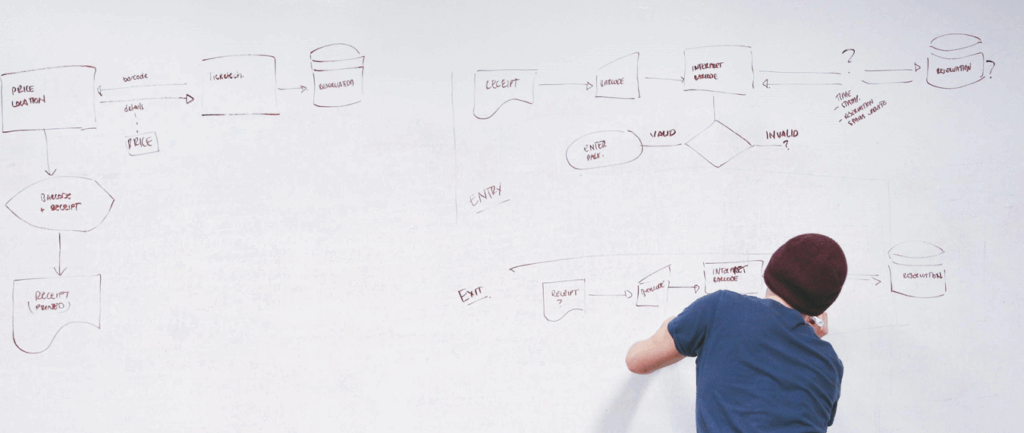
Together, we deliver for you an 18 foot plus process map showing your entire process and all its intricacies from start to finish. In addition to the map, are the challenges your employees face, along with a list of proposals and solutions for a more efficient and effective system:
“We as leaders need to orient ourselves; as we build teams we need to make sure they understand the process as part of their identity.”
People usually respond saying “We can do this, now that we see it.”

Sometimes fixing a business isn’t about rebuilding the whole machine… It is about knowing which bolt to tighten. Process Triage finds that bolt fast, so you do not waste time or money swinging hammers when all we need is a wrench.
🤝 Shoulder to Shoulder?
This creates a sense of safety, trust, and collaboration. Working shoulder to shoulder directly engages the limbic system. This is the part of our brain that governs emotions, motivation, and social bonding. This is an evolutionary approach:
When people physically (or psychologically) work side by side, rather than in hierarchical or confrontational setups (like top-down mandates), they feel emotionally safe.
This safety reduces fear and increases trust, which allows people to speak honestly about what is really broken in a process.
These core limbic drivers tap into our natural desire to belong and contribute, rather than respond with defensiveness or withdrawal.
This method contrasts with traditional process improvement approaches that can feel evaluative or threatening. This approach respects the neuroscience: people will not co-create solutions unless they feel safe doing so. This safety comes from shoulder-to-shoulder collaboration, not top-down control.
When people are standing shoulder to shoulder they will have conversations they would not ordinarily have face to face.
If you want to have a difficult conversation, the best place from an evolutionary perspective, in is in a car where you are shoulder to shoulder. When we are looking someone in the eye, we are looking for social clues:
Recognizing everyone has an agenda, we are changing our intonation, humor, seriousness, posture, etc. Genuine conversation is shoulder to shoulder. This is necessary for deep conversation.
Reflect on fondest memories bonding with people: Was it face to face or shoulder to shoulder?
“We work shoulder to shoulder because the limbic system doesn’t respond to PowerPoint, it responds to people. Trust is built through shared effort, not top-down instruction.” Derrick Mains (The Process Fixer)
🪞 Upon Reflection:
Rosie did not understand what was going on until about the 50th time:
“You really learn the relationship between teams and leaders.” He discovered what Deming has been preaching for the last 75 years: “You always have to look at process behavior before you look at people behavior. This is not intuitive.”
He also discovered how success broke the system. This created the appearance that the team had failed, when in fact it was just the opposite. The process got overrun by volume.
He realized he could anticipate the breaking point. Hence his famous question;
📏 What is the Capability Goal?
Every system inside your organization can handle a certain level of output. When it exceeds its capability, it will break… Sure, you can over engineered it, but why waste the money and resources?
You want to understand the capacity of every one of your systems. When you recognize things breaking down, this is NOT the time to throw more people at it. It is time to go back to the process.
Reidentify the challenges with it. Figure out what is going on. Look for the bottlenecks.
Make a new determination on things like automation, resource allocation… Then redeploy out into the company. See how people respond to that and how it works. Does it improve efficiency?

A lot of hiring is done because people are busy and need help. Before you do this, look at your process. Map it out. Determine its capability. Recognize how many people your process needs to produce your required output. Then, working backwards, make sure you are streamlining the process for your people, rather than misappropriating additional resources. This is a capability goal.
Every organization and each department should have one. Each manager should have a capability goal. Every individual should know what they and the organization can do and where they are in the utilization of that capability. Have a goal statement or behavioral statement for that process, expressing the (increased or required) speed, cost, quality, volume, etc. Then,
Talk about and identify where they think it is going to break. Where are the pain points going to be?
The easiest and best way to improve your capacity, is to figure out how to get everybody in a room and teach them all at the same time. This is a Process Triage Workshop: This allows them to take something that formerly took 60 days and get it done in one afternoon or day.
“A system is only as strong as its ability to improve itself. The true goal is capability, not control.”
People are not in need of information, they are in need of inspiration.
When we can inspire our people to grow and to think and to improve, we will be blown away at what they come up with.

Step into a business and you will see lots of problems. Do not solve them on your own. You have a cadre of friends interested in helping you.
Sometimes you don’t know what people have in their heads. Involve your people in the process and you will be amazed at their ingenuity.
The internal “experts” know more about what is happening in that process than anyone. In fact, they are the only ones who know it. They are the only ones close enough to see it. Your frontline staff is best suited for improving and polishing existing processes.
“Every process problem has a fix. Most teams already know what it is. Process Triage just gives them the map and moment to say it.”
📋 Summary & FAQs:

Q: What is Process Triage?
A: Process Triage is a high-impact, one-day workshop that equips your frontline team to diagnose, prioritize, and solve the very process problems slowing your business down. Less theory. More action.
Q: Who is behind it?
A: Process Triage was developed out of a crisis by Sprint employee Rosie Rosenberger. It is now owned by Derrick Mains, The Process Fixer. With decades of experience transforming operational chaos into clarity, they each have created a fast, proven method aligning teams and generating real improvement at an accelerated pace. Mains offers certification in the methodology.
Q: How does it work?
A: We gather your team, map your core process, and triage every pain point they experience. Next, we prioritize solutions that can be implemented fast. You leave the day with a clear, realistic plan your team owns and can execute immediately.
Q: What makes this different?
A: Most consultants are snake oil salespeople, incentivized to dish out invoices rather than solutions. We hand your team the tools to fix their own process, and they actually do it. It is intense. It is empowering. And it drives real results without waiting for top-down decisions.
Q: What kind of results can we expect?
A: Clients typically walk away with 15 – 25 immediately actionable fixes, many to implemented within 30 days. Think faster workflows, better communication, less rework, and a lot less frustration.
Q: Who should participate?
A: You and your frontline heroes; the “Believables.” The ones who live your systems every day. They know where the friction is. They just need the structure and support to solve it. Plus one or two decision-makers who can approve solutions. This is not just for managers.
Q: What kinds of problems does it solve?
A: It identifies process breakdowns, bottlenecks, and friction points; anything slowing down execution, causing errors, or frustrating customers or staff.
Q: Is it just another brainstorming session?
A: No. It is structured, time-boxed, and results-focused. Participants leave with a clear list of prioritized improvements and who owns them.
Q: Does it work for any type of business?
A: Yes. Process Triage has been used in manufacturing, healthcare, SaaS, services, nonprofits, and more. If there is a repeatable process, it can be triaged.
Q: Do we need a consultant to run it?
A: A trained Triage Facilitator runs the session (often a third-party or internal certified leader). However, it is not a long-term engagement. It is designed to be self-sustaining once the skill is learned.
Q: How long does it take?
A: Usually one day (6–8 hours). It is fast, focused, and action-oriented. You do not need weeks of consulting or months of analysis.
Q: What makes it different from Six Sigma or Lean?
A: It is faster, simpler, and employee-driven. No jargon, no belts, no weeks of training. It complements those methods, or stands alone if you just need results quickly.
Q: What is the investment?
A: A single day with Process Triage typically pays for itself in the first few weeks. Many clients find that the workshop pays for itself through increased efficiency, reduced rework, and enhanced team alignment. Pricing is based on team size and scope. Approximately $3000 – $10,000.
Q: What happens after the triage?
A: You get a triage report with:
- A visual map of the process
- A prioritized list of improvements
- Assigned ownership
- Next-step recommendations
Then the team executes fast.
Q: What is the biggest benefit?
A: You get:
- Faster execution
- Empowered employees
- Immediate wins
- Long-term improvement habits
And best of all, your team feels heard, respected, and in control of their work.
Q: What is the first step?
A: Keep reading until you see the big picture. Make sure you are a good fit. Then, when you are ready to schedule a workshop, call Parker at 434.409.9081 or click the button below.
👥 Ideal Clients:
Process Triage works best in businesses that rely on repeatable processes, have growing pains, or suffer from miscommunication across teams or departments.
Here are some ideal industries and business types where Process Triage is especially powerful:
🔧 Manufacturing & Production
- Repetitive workflows with frequent bottlenecks or quality issues
- Cross-functional teams (sales, ops, QA) that need alignment
- Ideal for lean initiatives or companies scaling fast
🧾 Professional Services (Accounting, Legal, Consulting)
- Complex, knowledge-based processes that need streamlining
- Frequent handoffs between roles causing rework or delay
- Great for firms that need to increase efficiency without sacrificing quality
🏥 Healthcare & Medical Practices
- Multiple roles (nurses, admin, billing, doctors) managing patient flow
- Constant pressure to reduce errors, delays, and improve experience
- Especially useful in clinics or group practices wanting to grow sustainably
📦 Logistics, Warehousing & Distribution
- Time-sensitive operations with high coordination needs
- Often experience hidden process waste and unnecessary steps
- Process Triage uncovers practical fixes from the warehouse floor to dispatch
🛠️ Construction & Trades
- Job workflows with many dependencies and subcontractor coordination
- Helps reduce project delays, improve scheduling, and manage rework
- Especially helpful for growing firms transitioning from owner-led to team-driven ops
💻 Software & Technology Services
- Agile teams with recurring sprints and development pipelines
- Great for aligning dev, QA, sales, and customer success on what is slowing delivery
- Encourages team-driven solutions without slowing innovation
🧲 Staff Recruiting Firms
Ideal when trying to place faster, retain clients, and reduce internal friction.
- Struggling with inconsistent intake, screening, or handoff processes.
- Losing placements or clients due to bottlenecks between recruiters and account managers.
- High-pressure environment with no shared clarity on “what’s breaking down.”
🛍️ Retail & Franchises
- Multi-location or multi-shift businesses with common SOP issues
- Ideal for improving customer experience consistency and inventory processes
🛠️ Custom Job or Fabrication Shops
Ideal when workflows are complex, customized, and prone to delays or rework.
- Each job is unique, but the process for quoting, building, or delivering is unclear or inconsistent.
- Delays, quality issues, or miscommunication between sales, design, and production teams.
- Need to uncover where things break down between departments or handoffs.
🛒 eCommerce Companies
Ideal when scaling operations or struggling with fulfillment bottlenecks.
- Frequent issues with order fulfillment speed, customer service, or returns.
- Experiencing high growth but internal processes can’t keep up.
- Need to streamline back-end operations like inventory, shipping, or customer communications.
☑️ Key Traits of Ideal Companies for Process Triage
- Teams that are willing to fix problems, who just need a framework
- Operations where communication gaps or handoffs cause friction
- Businesses that are scaling and feeling the pain of growing without clean processes
- Companies that value team-driven change, not just top-down mandates
Note: Process mapping can be successfully applied to multiple sub-processes; anything repeatable and valuable. However, depending on the complexity, you may have to stick to a specific product or service to be able to do triaging effectively.
In summary:
The higher your volume of output, the more your processing structure needs refinement.
The deeper the org chart, the more fractured the cost and resource allocation of the company.
The more people that you have, the more communication is necessary, the more people typically lack trust.
The more informal the communication, the more handoffs there are between departments, the more variation is brought into the system. This leads to more misunderstanding, more friction, more assumptions.
Informality means that we lack structure. It means we do not have a contractual relationship between departments. Instead, we have a very casual understanding of cross functional inputs and outputs. This is a limiting factor to your organization as you grow larger. Why not nip it at the bud?
“Improve constantly and forever the system of production and service.” W. Edwards Deming
🧬 Essential Traits:
Some fundamentals should be in place if an organization is to be successful with triaging:
- 🗸 The desire for continual learning and improvement
- 🗸 An environment that nurtures mutual respect among people
- 🗸 A culture of encouragement
- 🗸 An expectation of cooperation among all members of the organization
And has these minimum recommended qualifications:
- The business has 5–50 employees
- (Enough people for process issues, not so large it is bureaucratic)
- They are experiencing clear operational friction
- (Delays, rework, confusion, or lack of accountability)
- The team has already tried to fix things internally
- (Yet still feels stuck)
- Leadership is open to frontline input
- (This is key to triage success)
- They are growth-minded,
- (Not just survival-minded)
- They can allocate at least one (1) day for the triage session
- (This ensures commitment)
- The owner/CEO is willing to listen and act on insights
- (Not just “check a box”)
- You have clear organizational goals and a team with excellent job knowledge.
- (Required for successful process triaging)
This is a great tool in your leadership kit, especially when a high-value process requires continual self-correcting improvement.
🛒 Buying Criteria:
To help you make an informed decision, here are a few factors or standards you should consider before entertaining the idea of having a process triage workshop:
1. Burning Need for Operational Efficiency
- ✔️ You are experiencing bottlenecks, delays, or quality issues in key business processes
- ✔️ Leaders or teams are frustrated with recurring problems that are not getting fixed
- ✔️ There is pressure to grow, scale, or cut costs—without sacrificing quality or culture
2. Growth-Stage Business or Department
- 🧱 You are an ideal client if you are growing or scaling (>$3M–$100M revenue range)
- 🔁 Rapid hiring, new systems, or increased complexity is making old processes break down
- ⚙️ You need structured problem-solving, not just band aid solutions
3. Strong Internal Team (Not a People Problem)
- 👥 Leadership agrees their people are capable and motivated, but overwhelmed or misaligned
- 💡 The real issue is “the process,” not “the person”
- 🤝 You want to empower employees to own and fix broken workflows themselves
4. Committed Leadership & Accountability Culture
- 🧭 Your leadership team is open to structured facilitation and external feedback
- 🔍 Willing to look at root causes and not just symptoms
- 🧱 You have or are building a culture of responsibility and continual improvement
5. Past Attempts at Improvement Fell Short
- ❌ You have tried brainstorming sessions, Lean, Six Sigma, or team meetings, yet nothing sticks
- 🧠 You need real traction, not another “flavor of the month”
- 🎯 Process Triage offers a tactical, one (1) day solution with lasting value
6. Owner or Executive-Level Decision-Maker is Involved
- 💼 You, the buyer, are either:
- The business owner
- A division VP or GM
- Head of operations or performance improvement
- 💰 You have budget authority or strong influence in budget allocation
- 💬 You are tired of wasting time and money on unclear or ineffective initiatives
7. Want a Quick Win That Builds Long-Term Capability
- 🚀 You want results in one day, but also a system their team can reuse
- 🧰 You want team alignment and prioritized actions, not just reports
- 🔁 You value a repeatable, scalable method for continual process improvement
Ideal Psychographics
- 🧠 Open to outside facilitation but not looking to outsource responsibility
- 🛠️ Practical, action-oriented mindset over theoretical frameworks
- 🤝 Believe that front-line employees should help design the fix (not just execs or consultants)
“We don’t need more meetings. We need better outcomes…”
💡 Key Benefits:
The greatest benefit of Process Triage lies in its ability to swiftly transform operational challenges into actionable solutions by leveraging the insights of your frontline team.

- ☑️ Empowers Frontline Teams: By involving those directly engaged in daily operations, Process Triage taps into their firsthand knowledge, fostering ownership and commitment to improvements.
- ☑️ Accelerates Problem-Solving: The structured approach enables organizations to identify, prioritize, and address process inefficiencies rapidly, often within a single day.
- ☑️ Enhances Operational Efficiency: Ensures that critical issues are addressed promptly, minimizing downtime and disruptions. By systematically addressing bottlenecks and redundancies, businesses can streamline workflows, reduce errors, and improve overall productivity.
- ☑️ Fosters a Culture of Continual Improvement: Provides insights into recurring issues and helps in developing strategies for continual improvement. Engaging teams in the triage process cultivates a proactive mindset, encouraging ongoing evaluation and enhancement of processes.
- ☑️ Resource Allocation: Helps in effectively allocating resources to where they are needed most.
- ☑️ Improved Communication: Facilitates better communication and coordination among team members.
In essence, Process Triage serves as a catalyst for meaningful change, turning collective team insights into tangible improvements that drive efficiency and growth.
Documenting process helps you plan, grow, prioritize and anticipate the impact of improvement. It helps refine your culture and build momentum. It helps you see where to focus your work.

All work is accomplished in processes. When processes are not defined, people are not 100% clear about what the work is, or what the next person’s requirements of their work should be.
Clarity begins when you can see what the work is, the processes involved, the performance expectations, who is responsible for what, and the system’s interdependencies towards outcomes and the common, shared aim of the organization.
This improves quality of both the product/service; by improving the process upon which that product/service is made.
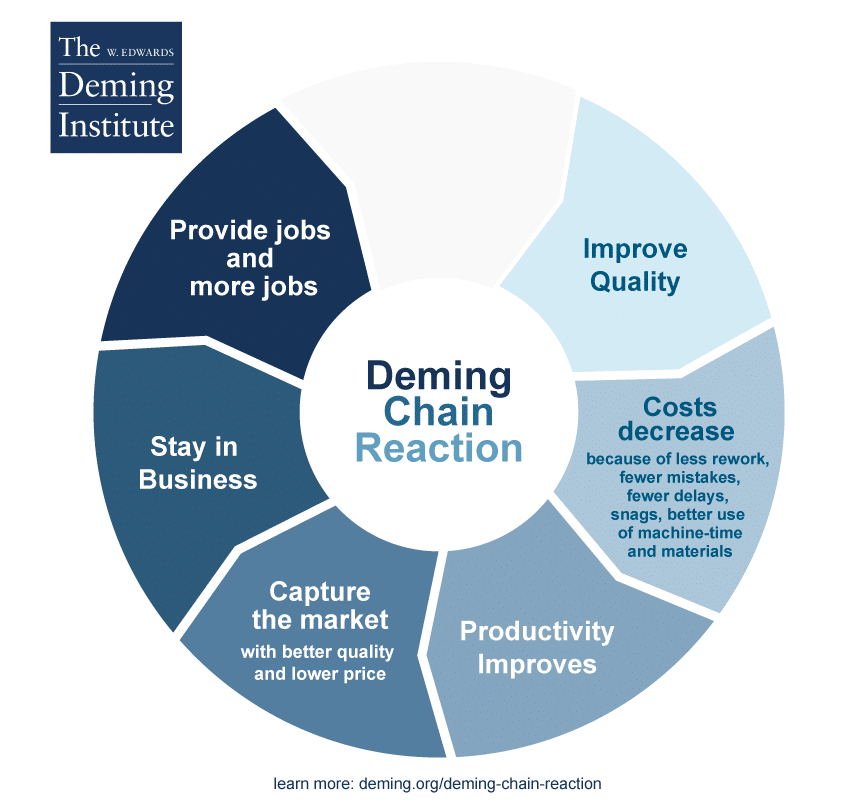
When you improve Quality, you decrease costs through less rework. This improves productivity. Enabling you to capture a larger market share with lower prices. This keeps you in business longer. It allows you to provide better jobs, elicit better talent, and expand the market. (Deming chain reaction – starts with Quality)
Other benefits include:
- Retention
- Profitability
- Competitive advantage
- Employee satisfaction
- Increased certainty
- Reduced risk
- Higher margins
- Creative emulation
- Develops more leaders
- Reduces waste (unnecessary motions, defects, waiting times)
- Brainstorming solutions
- Streamline operations
- Enhance productivity
- Lays out every step from start to finish, offering a clear overview of how work moves through your organization, which helps you plan and grow
- Generates improvement proposal lists with practical, bottoms-up buy-in
- Identify opportunities
- Enhances communication
- Mitigates the chance of missing steps
- Tremendous interpersonal empathy and end-to-end process awareness.
- Team members now anticipate what can go wrong and how their work impacts others
- Creates self-correction, discipline and accountability among team members
- Easy to see impacted stakeholders
- Helps identify down-stream impacts
- Better understand the customer experience
- Helps communicate who is accountable for activities, inputs and outputs of steps in a process
- Increased capacity to make solid business justified decisions
- Helps you create discipline accountability, consistency and scalability
- Aids systems thinking, predictability, quality control, visual communication, problem solving, unit costs, training, efficiency, clarity…
By implementing process triage, organizations can streamline their workflows, enhance productivity, and improve overall operational efficiency.
“This isn’t theory. This is results in 72 hours; mapped, prioritized, and owned by your team.”
🗺️ The Power of Maps:
Maps engage, reveal, protect, educate, transform and inspire.
Maps allow you to see connections, judge distance, ask questions about your course, and navigate the terrain like no other method.
Maps were key to our survival as a species and paramount in our discoveries. They are the earliest method of strategy, and they hold secrets about your work that you cannot possibly imagine.
Maps show you the “true north” and your aim. They direct the actions you need to take to remove waste, friction, and pain from the system to create an environment where work can flourish.
They also are exceptionally good at telling you how long things take and give you alternatives when necessary.

Like any map, one of its core navigational purposes is to measure distance, calculate speed and time, and create alternative routes to avoid potential delays.
Once you start mapping and gain even a basic framework of your system (and the systems within it) you unlock a hidden understanding. It is like your brain unlocks a new level of thinking that allows all causes and effects to finally make sense.
This is where the real value lies. Suddenly, the secrets of your operation start to reveal themselves, showing you where the treasure is buried; the inefficiencies, the opportunities, the places where small adjustments lead to massive gains.
With this insight, you now have the power to navigate your business with purpose and precision, uncovering opportunities that others cannot see.
A physically displayed, easy-to-navigate map on a wall allows for a profound level of knowledge and unlocks aspects of measurement that no other tool can do. Time, distance, relationships, interactions, sequences, cycles, duration; each of these aspects is fundamental to your operations, and their measurements are unlocked only via maps.
With your map on your wall and your team assembled, you can now begin to truly understand the work: The HOW.
Through the powerful lens of mapping, you can unlock a multitude of dimensions and measurements, each offering valuable insights into your organization. Like a hidden treasure trove, these insights can lead to transformative “aha” moments, revealing untapped opportunities for growth and improvement.
Each discovery has the potential to significantly impact your bottom line, with some yielding tens or hundreds of thousands of dollars in saving or increased revenue, while others could even be worth millions.
By leveraging these insights, you can differentiate yourself from competitors, carving out a unique position in the market and mitigating the ever-present risk of falling victim to the failure rate plaguing businesses operating under outdated systems.
Each step in the journey and each pain is a problem uncovered. Each is always met with one of four choices: we can react, we can resolve, we can improve, or we can innovate.
“I’ve never seen my team come together to solve so many problems in a single day. We all know exactly what to do next.”
💼 Why Employers and Executives Love it:
This is a powerful tool in the right hands.
Issue processing builds powerful teams that bring solutions to senior leadership, not more issues, for core business processes.
This is more of a communication tool than a process improvement tool.
It frees time for you to focus on the creative and strategic work you cannot delegate.
It gives you (the leader) the tools to confidently delegate and elevate issue processing to others.
This leaves the day-to-day incremental improvement of a process with those who implement it.
The more the business grows, the more the business delegates the producer and process manager work to others to allocate time for executive work, which simply cannot be delegated. Besides;

You cannot fix what you cannot see.
You determine your company’s destination. A map will help you navigate and get there much quicker. A visual display turns abstract problems into concrete action.
So, we build these big process maps that are sometimes 15 to 20 feet long showing you the interconnectivity of everything that is happening in your company. This comes with a list of improvements that are needed to make work flow more efficient.
This is a revolutionary approach, a methodology, a quality and value management system that can radically alter the trajectory of your organization. It can save you. It can cause you to get to the next level. It will improve the relationships between the people inside your organization. It will give you incredible clarity in a dimension that you have never seen before.
This process will find you significant dollars to your bottom line. There is no doubt about it.
The system is designed to increase shareholder value while simultaneously helping employees be heard and improving your company culture.
Many executives are focused on growth. In truth, you can make way more money (double, triple your profits) through the same focus on Efficiency.

“Process Triage turns frustration into shared ownership.”
🧭 One Alternative:
According to Derrick Mains, The Process Fixer:
“I had been doing process work for 20 years, sending out $100,000 invoices and SOP’s to do Discovery. Some people were shocked by the expense, but I had to do management by wandering around with stop watches, interviewing hundreds of people…
What I discovered with the triage method was an elegant model showing me in a single day how to extract from people what was happening in their work and to come up with a proposed remedy to the problems that they were having. Prior to this,
I had never seen this done in under 90 days. Even at this rate, people were claiming I was a speed demon. When I saw it get done in 24 hours, I knew I had to shut up and listen.”

“Listening is respect in action — it tells your people their experience matters.”
🧏 Listening is Leading:
(Listening using dialogue in a hyper structured manner with a specific aim…)
Here are a couple famous case examples of why you should consider employee feedback: (Namely, just to take the pressure off of you. You are not expected to have ALL the answers, ALL the time…)
Have you seen the movie Flamin’ Hot? The true story of chip manufacturer on the verge of bankruptcy? The CEO played by Tony Shalhoub creates a video asking if anyone in the organization has an idea that can save the company. Well, the gang banging janitor did.
It was only because the CEO (Roger Enrico) asked the question that the breakthrough innovation was permitted. This is the premise behind the Process Triage. I highly recommend watching it if you have not already.

Another classic janitorial savior story:

During a hotel renovation planning meeting, while architects and executives debated costly design options, a janitor who had quietly cleaned the premises for years, suggested installing an exterior elevator to avoid disrupting the hotel’s interior structure and operations. The hotel was the El Cortez Hotel in San Diego.
His idea, born from practical experience navigating the building daily, was initially overlooked but later recognized as both cost-effective and minimally invasive. The solution not only preserved the hotel’s historic charm but also saved significant renovation time and money, illustrating the value of listening to frontline workers who understand the space in ways decision-makers often overlook.
The historic (1956) “Starlight Express” was the world’s first outside hydraulic glass elevator. It allowed guests to ascend directly to the hotel’s dining facilities while enjoying panoramic views of the city. The elevator not only preserved the hotel’s interior but also became a significant attraction, drawing visitors and influencing the design of similar elevators in other hotels, such as the Fairmont Hotel in San Francisco and The Ilikai in Hawaii.
Here it is: The main attraction; the idea sprung from the most overlooked, underappreciated and unexpected of all resources:
“People don’t resist change. They resist chaos. Process Triage creates clarity and momentum.”
🎯 Your Aim:
One of your aims (better than a goal) is to get the highest and best use out of every action, every opportunity, every effort. Of all the ways you can transform your business, I believe triaging is the most intelligent and respectful method replete with integrity to help lead your team to more clear, better and more powerful understanding of all the activities, impact, and soon to be realized advantages going on in their work lives that few people recognize.
We assume so much. We assume everyone understands the implications. We assume everybody is clear, and absolutely perceives all the advantages and nuances of what things are all about and what they mean to them, positively and negatively. However,
Most people do not have a clue. I submit, that because they do not know, because there is a void, they feel uncomfortable. They are not happy. They are silently begging to be led.
You can give them happiness by helping them better understand and appreciate the voids, by connecting the dots of the vague and the unclear aspects of their work life. In other words;
Your purpose as a value creator, as a contributor, as somebody focused externally; is to help people fill these voids in their life.
One of the biggest crevices in people’s lives is the lack of understanding and appreciating what something means to them. By your helping educate them, you are doing one of the most ennobling, one of the most valuable, one of the most enriching services. And in the process, delightfully, you will be enriching yourself also.
“Seeing how each piece drives the next and how ‘pains’ affect customers vs. employees has made everyone feel so connected now.”
🧠 Remember:
You are the beneficiary.

The secret to guaranteeing you the most successful and profitable relationships with others, to opening the door to infinite opportunity throughout the rest of your life; is through other people.
Your people hold the keys and the maps and the shortcuts to the places, the ideas, the opportunities and the payoffs you want to get out of your life and your opportunity.
How do you get people to push you to the higher levels you seek to achieve?
It is simple. With the right philosophy, design and organizational structure, your people have more to gain by helping you and seeing you be successful at your objective than not.
When people realize that you achieving your objective or your purpose gives them a bigger or greater self-serving payoff, they are going to move heaven and earth to see to it that you get your outcome. For example;
When someone you are having in a relationship with realizes that your purpose and your goal is to get them what they want, they are going to move heaven and earth to help you get your result, because your result is their result.
When people in your company trust that your goal is to improve their lives and make their work enriching and intrinsically rewarding, they will see to it that you get your desired outcome, because it is theirs.
Invoke the passion of others. People naturally enjoy and are motivated by improving what they do. You will discover they are full of gems of valuable information. Allow them the opportunity to offer ways of improving company performance, dealings with clients, vendors and suppliers…
“When people are heard, they engage. Process Triage gives every front-line voice a seat at the table.”
☀️ Positive Mental Attitude:
The mindset you are developing is based on getting the highest and best use of your value, your time, your passion. In other words, it is based on optimization:
Always making sure that everything you do in every aspect of your life gives as much or more value to others than you get back. “Adding value” is not just an abstract thought. It is a very real connection you make with everybody you deal with in your business or professional or personal life.

This is about appreciation and gratitude. It is smiling from the depth of your heart because you know this gives them acknowledgment. This makes it all worthwhile.
In a very real sense, you are thanking them for their effort. Providing them with a sense of passion and purpose. I hope you realize;
It is always all about them. It is never about you.
When you are externally focused, when you are connected and compelled to make the experience or the transaction better for the other side than even for you, you cannot help but succeed at higher levels than you ever dreamed possible.
As Fran Tarkenton puts it, “In everything you do your purpose should be to help make someone’s life better.”
My wish is for you to feel this. To change the way you see yourself. It could change everything you do. It is that basic. Treasure your people and they will in turn treasure your clients. Enriching their lives will return full cycle back to you.
“You already have the people. Process Triage helps them build the process they deserve.”
My wish for you, my wish for America, that we celebrate employees, gain new and profound insights into innovation, and transform the way we do business.
Instead of sleepless nights and harm against humanity, my desire is to unleash the joy and the riches you have available; through a simple shift in thinking:
This is about getting the highest and best use out of human capital. This is the easiest and quickest way to get immediate and tangible results. This is essentially the Napoleon Hill Mastermind Principle.
Be a good listener. Let people tell you what they need. Be a solution provider (by allowing them the opportunity to provide their own solutions). Be externally focused, not self-absorbed. Uncover emotions and try to understand what drives other people. Never take people for granted. Never assume you can keep relationships alive without attention.
“Human capital is the only asset that appreciates with investment. When you grow your people, you grow your business.”
🧲 Leverage People:
How do you profit from these other people?
Help them realize their true worth and value to themselves and to others. This is the most wonderful gift you can give anyone, and the reward you will get from doing it is one of the greatest feelings ever known.
There are approaches you can use in all aspects of your life, your job, or your business that have the capacity to produce far greater yield for the effort, the time, and the activity.
This yield is not necessarily just an initial yield. Consider not just what it produces now, but the ongoing, residual value that effort/ activity/ action/ approach produces for you forever.
You understand that the greatest leverage you have is to get far greater outcome from every action, every effort, every human or financial investment you make. This is absolutely possible:
One approach may produce X. A different, more powerful, more optimal approach could produce 5X, or 10X, or 20X. You owe it to yourself to always get the highest and best use of your time, your efforts, your emotions, your passions.

This is a rule of the secret wealth mindset (Jay Abraham): You cannot get a lot until you give a lot. It is a simple process. You cannot give a lot until you understand the other side’s needs and desires (UX).
Once you become sensitive and compassionate towards their objective, there is a whole change of thrust. The moment you understand how to look outside yourself, is the moment you will start making massive and quantum leaps in what you accomplish.
“Those who write the plan do not fight the plan.” Jill Forbes
🦸 Be Their Hero:
Imagine your team solving their own process problems, without adding consultants, staff, or software.
I want to you to increase the pulling power of all your activities.
I got a hunch you like risk-managed, time-boxed, and results-driven solutions? By now you understand the Process Triage is:
- Quick
- Controlled
- Practical
- Owned by the team (not outsiders)
You get to play the hero; watching your team respectfully collaborating and listening to each other and they stand shoulder to shoulder solving each other’s goal driven problems. This will be the easiest work you do.

Pareto’s principle is always at work. Before you spend serious “fix it” money, a quick triage will provide you usually with 30 or so proposals to reach the goal you are striving to achieve. Pareto’s law states that five (5) or six (6) of these remedies will account for 80% of the problem.
More often than not, these proposals are simple and affordable. Resolvable with the resources on hand.
Sometimes, all you need is an emissary to stand in between and say, “Hey, let me go talk to your people. Let me do a workshop with them. Let me extract the information and bring it back to you.”
“Lean, Six Sigma, Agile – they all work better when Process Triage uncovers the real issues first.”
🕊️ Emissary:
For first time Triagers, the best shot at success requires an objective, organizationally neutral and certified facilitator.
Our approach is often the turning point for many companies we engage with.
An emissary (me or someone from Derrick’s team) interacts with those on the frontline and encourages them to share their process, pain, and proposed remedies for removing that pain. We capture their ideas, refine them, and present them to leaders on their behalf.

Empowering frontline workers to engage and extract information about the issues occurring at work; such as broken processes, frustrating obstacles, and the small inefficiencies add up to massive inefficiency, customer dissatisfaction, and employee churn. Why is this critical? Because, in the past or elsewhere;
If they had told you about these problems, some of you likely would have fired them or at least labelled them as “troublemakers.”
“It’s incredible to build our process map and have an open dialog without executive management taking part.”
🤝 Teamwork:
How do you build capacity inside your team so you can accomplish more, with less people?
The raison d’être (the most important reason or purpose for someone or something’s existence); the reason for a team is run the process, right?
This is all about team development. Triaging is process improvement. Process Improvement is Team Development.
Middle managers develop teams. Executives develop team builders. Yet at some point, a team can out-think a management.
As a team building tool and exercise, we can take any group and sync them up in terms of the work they do together. Immersing them for a moment in what it looks like to perform at a required level.
This is about working together to hit a goal. Giving your people an opportunity to talk about their pain points; the recurring behaviors that are eventually going to inhibit this goal. Engaging them in dialogue, with respect, collaboration, and gravitas. Allowing your frontline to rank what they ought to work on first.
This is a collaborative effort designed to reduce waste and improve throughput (which is where value is created).
Frontline workers become problem-solvers, not just problem-reporters; expanding organizational brainpower.
Process Triage builds capacity by improving process flow, empowering teams to solve problems, and aligning efforts with business strategy. This is not about adding more people. It is about helping your current team work smarter and more effectively.
A lot of process fixes involve team situational awareness: Their ability to communicate with each other up and down the line, which does not take a lot of money:
Their eyes are already there. You are already paying for the eyes and hands to be there, now you are just engaging the brain.
“The people who do the work, know the work. Bring them together. They already hold the answers. Process Triage just gives them the space and structure to solve it as a team.” Rosey” Rosenberger
❓ The Reason Why:
You have the responsibility to lead clients to a more strategic buying philosophy.
Let us be honest: You want to produce high quality outcomes for your clients. To do this, you have to produce high quality outcomes for the people directly serving and interacting with those clients (your employees).
Every system in your organization has to be held to some sort of goal, not just the individuals inside that organization.
If your goal is to provide the best, highest level of outcomes which generate the most value for a client, then you have to help your people understand “The Why.”
Simon Sinek talks about the Reason Why:
He says every business knows what they do. Some know how they do it. Very, very few know WHY they do it. Start with why:
Once you have established the why, then you can move on to How.
The Why cannot just be what is in it for them. They have to understand what is in it for the client. This is a cultural thing. This is what your culture and company stand for.
It is very important that our people understand why each of these departments exist. Each department should have a why statement.
For example: Sales should be able to write out a Why Statement that says we exist to educate consumers so that they can understand how our products will improve their lives and bring significant value to them…
This is one of the things we do in the process walk with each department. When we do mapping, showing the interconnectivity of everything that is happening. We provide a list of improvements that are needed in each department for better flow. We put this up on a wall so people in various departments can walk through this with each other. They actually say, “Hey, here’s where we get the leads… Here’s the type of leads that we get… Here’s what tends to trigger them to want to come and purchase from us…”
This information is really important. Not just to marketing. But also to sales to understand why the customer came through the process. It is important operations to understand why and what outcome the client wants. Each department should write a why statement.
“When people understand the reason why, they don’t just comply, they commit. Purpose turns tasks into meaning and effort into energy.”
🧾 Departmental Requirements:
Specialization is isolating. It blinds you to the awareness of the whole:
We want to be exceptionally clear on the requirements for each department, not just individuals in the department.
We want to create a formal approach, a contractual relationship between these departments where they understand what it is and that they must deliver and they get paid like we get paid on the delivery of high quality outcome. This is how we can transform business.
We need to have some sort of cultural artifact to look to and be able to say; “This is what we’re working towards.” We need to improve the formality of the handoffs of the processes inside our organizations.

Bringing formality to departmental handoffs will increase the quality of everyone’s work.
This is not about just signing contracts. It is about giving the highest quality, highest value output to a department so that they can do what they need to do to accomplish their goals.
Quality is always directly correlated to profit. Quality and profit go hand in hand. The higher the quality you have, the better your profits are.
Increasing quality will always make you more profitable because it means You have more trust in the system. It also means Clients have more trust in the system. Your marketing becomes easier. Your sales becomes easier. Your operations, your service… it all improves as you bring formality into your pass off processes.
They say “Success kills more companies than failure.” Volume changes everything. If you do not have the structure, you cannot handle the volume.
“Most process breakdowns don’t happen inside departments. They happen in the handoffs between them. Process Triage brings everyone to the table to design better handoffs, so quality does not get dropped in the gap.” Joseph “Rosey” Rosenberger
📌 Best Practice:

How do you determine what is the best practice? Can you point to the page where it is illustrated? Has everyone signed off on it? What methodology did you use? What research did you do? Did you talk to employees? How many people did you interview?
You will gain compelling answers to these questions and more.
Where focus goes, energy flows. People will care more about the work. They will do better work.
This is going to reduce stress, returns and rework. It will make your product/service easier to sell. It will enhance your culture.
Bringing formality to departmental handoffs will increase the quality of everyone’s work.
This is the Hawthorne effect in action: The Hawthorne effect refers to the phenomenon where participants in a study or experiment change their behavior simply because they are aware they are being observed or studied, regardless of any changes in the actual experimental conditions.
What this really means is that mere attention from you or any number of researchers can lead to improved performance or altered behavior, making it a potential confound in research results.
Ultimately, the Hawthorne Works factory in the 1920’s discovered that productivity improves when it appears management cares about its staff.
“Best practices are only best until something better comes along. The real best practice is Kaizen (continual improvement).”
📎 Keep in Mind:
Results come from situational awareness.
If a team can see it, a team can generally fix it, but one person very rarely sees it all because they do not have the physical capability to see it ALL.
You cannot fix what you cannot see.

This is why process maps are critically important. You cannot fix a company without a processing map. It’s just not possible. You don’t understand how things are happening. You don’t understand where things are happening. How can I fix something if I don’t know where the problem is, I don’t even know how to get to it and how it occurs.
This is why when you call customer service for tech support, they want you to unplug your computer and plug it back in. You must understand the circumstances, the situation in which this is happening so that you can bring the resolution.
“Visibility turns hidden problems into solvable ones, and guesswork into action.”
🧗 The Challenge:
The problem is, the situational awareness of what is happening in the lead to cash process is “unconsciously functional” in the C-Suite:
The C-Suite is getting constant feedback from all over the place. They are semi-aware of what is going on. They know what is going on generally. However, it is going to be filtered the more they have to delegate.
While this filtering is natural and necessary. We have to create this same original C-suite awareness closer to the work, The only reason that team exists is because you partitioned the work. The process demands a team.
We have to organize that team and teach it to be situationally aware somehow. We have to pull them offline once in a while and get them talking to each other in a very structured way; by looking at the process standing shoulder to shoulder.

It is the occasional, back and forth exchange of ideas that helps us obtain a higher level of understanding of the cause and effects happening under your roof. Speculation is common;
Quite often, there is a lot of guessing. This is why we involve the front line staff: When you hear it from the horse’s mouth, it makes it a lot easier to determine if it is real or not.
What operational challenges are you currently facing?
🏞️ Ideal Scenario:
(For me) would be converting “leaders” from the militant attitude of “This is what we do and this is the way we do it, so take it or leave it” to questioning how can WE serve, fulfill, assist or improve the quality of the Client’s life?
Refocusing your attention from what you can do for yourself, on behalf of your company, to the end user:
Making the client’s life more successful. In this process, turning the attitude from one of self-serving, to one of selflessness.
One of the biggest philosophical breakthroughs Jay Abraham (The Strategy of Preeminence) has established in the business arena is teaching people how to adopt an attitude of what he calls a “super servant.”
When you think of a servant, it may conjure up a negative image, but in reality it is quite positive. Because, your goal in life, in business, through employee jobs; must be to identify and understand how many more, and better, and continual ways you can help serve, or fulfill, or clarify the non-verbalized needs and desires of your client and your marketplace. Your marketplace being whomever it is you are trying to positively impact…
This is one of the most wonderful secrets of the wealth principle. The moment you switch your focus from internal to external (UX, for example); from self-serving to selfless; from “What’s in it for me?” to “How can I be a servant leader? How can I enrich the life, the business, the profitability, the satisfaction or the happiness of the other side” your own situation starts improving massively.
In my dream scenario, I give you something you never realized was possible: Continual and perpetual control and certainty of your ability to always create the business, the future, the success, and the happiness you want, by discovering exactly what your people and clients want.
“Your goal is not to sell what you have. It’s to understand what they need, what they want, what they dream about—and then help them get it.” Jay Abraham
📝 Quick Note About Clients:
You have four categories of clients under your service:
- Those that pay you (customers)
- The ones you pay (your internal team)
- Your vendors
- Your professional advisors
The first one is your team members and staff. If you do not fall in love with them, if you do not want for them the greatest outcome, the greatest growth, the greatest achievement, the greatest satisfaction, the greatest happiness, the greatest purposeful, the greatest happiest families, their families to be the richest they can be both in monetary terms and in emotional and psychic terms, then guess what? Then the chain of congruency is broken. They cannot basically be a lever or an extension of your big vision, can they? Think about it.
Appreciation for your employees is paid forward to appreciation for your paying clients (Aka “customers,” though this word denotes a lower level of care, respect and service. “Clients signifies a relationship built on trust, authority, and an ongoing partnership where advice and expertise are provide. A “customer” is someone who makes a one-time purchase of a commodity or service).
Same thing with your vendors. Trying to hammer them down, trying to basically get over on them… You want them to be successful. You do not want them to get more on you than they should, but you want them to see you as their greatest advocate, their greatest admirer. You want them to think of you first to constantly be coming up with solutions, improvements, innovations, breakthroughs for you. The Strategy of Preeminence presumes and expects you will absolutely commit yourself, your company, your entire team of clients to constant array of breakthroughs in the areas of marketing, strategy, management, innovation…
🏢 Your Organization:
Executives regularly overestimate the importance of acquiring resources and underestimate the ability to make more out of what we have or what is simple to obtain. But do you know who does not?
Who in your organization finds a way to make it happen, even in the face of pain and adversity? While under the constant pressure of fear and finance?
YOUR PEOPLE.
They are experts at it. Nowhere is it chiseled in stone “Management thinks best.” The truth is, if management knows best, why do so many businesses fail?
What we are striving for is cooperation (not competition between the two “sides”).
Is this cultural myopia? Why do so many leaders ignore frontline innovation? Why do we:
- Assume solutions must come from the top?
- Over-complicate simple problems?
- Prioritize expert opinions over worker insights?
- Mistake complexity for sophistication?
- Not ask people who are actually doing the work?

People naturally enjoy and are motivated by improving what they do.
As leaders learn to rely on these intrinsic motivators, they will learn to rely less on outside, or extrinsic, motivators such as bonuses, awards, competition, and the trappings of success which can divert attention and energy from the purpose of the organization.
(If this idea is foreign to you, I highly recommend the book Punished by Rewards by Alfie Kohn.)
Both encouragement and discouragement come from the systems in which people work and from the interactions they have with others in the system.
People can be very discouraged when beset with problems occurring from bad systems, especially if there is no time or resources to solve problems or address the overall system issues.
A leader can provide significant encouragement simply by improving the system in which people work and by giving them opportunities to make improvements in their daily work.
Ideally, everyone should be able to describe the changes they are currently testing and what they are learning.
“The best innovations do not come from the boardroom. They come from the breakroom. Frontline teams see the friction, feel the waste, and they know where the real breakthroughs live.”
⚙️ Optimizing Your Capacity:
You will never find out what is wrong until you go out and seek out what is wrong. Hearing it indirectly from your CFO, your managers, a TikTok business guru, from books, or even me; will not cut it.
If the people you are listening to are influenced by wrong thinking, you are doing nothing more than playing a game of telephone where you are far, far down the line from the source. Perpetuating bad ideas simply because they were taught to you is not progress.
Observing the work up close and personal is foreign to us because we have been told for nearly a century that our job is to act as the brain; the head and not the hands.

As leaders, we have been trained to extract ourselves, delegate, and work on the big vision, leaving the details to someone else. Oddly, leaders are still focused on quarterly results even with the advice to get strategic, think big, start with why, and become subject matter experts.
“You do not grow by adding more effort. You grow by optimizing the capacity you already have. Efficiency is not about doing more. it is about doing the right things better.”
👁️ Power of Visibility:

To see how work gets done, you must do something radical that corporate leaders have not done in our digital age. You must do what executives did during WWII:
You must physically go and see the work production workers are performing and be a part of improving it.
This is where the action is. This is where the value is created: On the shop floor. In the office space. This is where the magic of work unfolds.
Introspection cannot detect illusions.
Sitting and contemplating does nothing to drop the veil, showing you the truth. Certain things can only be discovered by seeing it for yourself.
Analysis without empirical observation means you are operating without the sense of sight. You are not operating enlightened. You are operating blind.
We are visual creatures.
“What you cannot see, you cannot fix. Visibility turns confusion into clarity, waste into opportunity, and silence into action.”
📋 Responsibilities:
Your people may be in pain inside your system. If you simply ask, they may not confirm. They cannot save themselves. Only you can save them by truly collaborating with them.
At the executive level, your concerns are budget, brand, business model, balance sheet, and culture…
Your managers are overseeing the work being done. They are concerned about hiring, reporting, and managing systems and resources…
As producer doing the work, your frontline are dealing with broken things. Things that happen that should not happen. Things that are the root of all your other problems. They creep into your business slowly. Where do problems start?
For the most part, you wait until the problems get big enough to warrant your attention. These are often simple, easy-to-resolve things that are being ignored until such a time they threaten to kill you.

There is a list of things stopping you from achieving what you want out of your business. These stand in the way on a daily basis. They obstruct, torment, and rob you of time with your family.
Obtaining this list should be your utmost focus.

This is a list of all the things that are happening that should not be happening:
All the things that stand in the way, slow the path and restrict your people.
Finding these things and working on that list is the key to solving all the problems (pain points) in your business.
“People do not fail. Systems do. Most problems are symptoms of broken processes, not broken people. Fix the system, and performance will follow.”
🩹 Pain Points:
Pain points are delays.
They are measurements of how much and how often a recurring behavior or event happens that inhibits the capability goal. The smallest things can stop a process from running well.
Your weakest link controls everything.
The slowest step in your process dictates the speed of the entire system. Fix that and the whole machine moves faster.

A business designed to minimize these forces moves faster, adapts quicker and produces more with less.
When companies fail to remove buried inefficiencies, they eventually grind to a halt while competitors flow past them.
You want to create a process that sustains itself. A self-managing business.
The first step is simplifying work, cutting steps, eliminating bottlenecks and automating where possible.
User-friendliness is about making things simple, intuitive and designed with the end user in mind. If a tool, process, or system causes friction, it is an enemy to be hunted down and controlled.
Everything we build needs to reduce complexity and make it easier for people to perform their jobs.
“User-friendliness is not just a feature. It is a necessity. The best solutions are the ones so simple and intuitive that people do not have to think twice to use them.”
🧱 Bottlenecks:
Problems. Tension. Stress. Friction. Resistance. Inefficiencies between departments:
Where is friction causing the deterioration of energy as it flows through the system? Can you identify the bottlenecks slowing down your process? What are the points of contention? The quantifiable, identifiable things that people inside the organization see occur on a regular, consistent basis?
These are the rough edges between people, processes, and departments where energy is lost.
What are things in your business that feel harder than they should be? Where is energy being drained? What is causing it? Most often, it is:
- Unclear roles
- Redundant approvals
- Bureaucratic bottlenecks
- Interdepartmental conflicts
- Manual tasks that should be automated
- Are people wasting time looking for information? Stuck in approval loops? Repeating unnecessary tasks?
Pain is the observation of something that should not be happening, that we can stop from occurring. In other words; resistance: The force that keeps bad systems in place and prevents change. For example:
- “This is the way we’ve always done it”
- Bureaucracy
- Decision bottlenecks
- Hidden inefficiencies cemented over time
Pain is the result of a process. It is not a person or a resource constraint. Resource constraints are not pain points:
Throwing more resources at these problems does not fix them. At best, more resources create more problems faster. If there was an error in your inputs, procedure, practice, tech or tool; that would have been exposed, analyzed and redesigned.
Most directors and managers have earned their roles by being effective problem-solvers. This is something they are not eager to hand off or delegate. But unless the root cause is addressed, the same issues keep coming back. This is why I believe the people closest to the work are best positioned to fix it.

“The people closest to the work hold the key to its success. Delegating decision-making to frontline workers empowers innovation, speeds up problem-solving, and builds ownership.”
🔍 Example:
Every business has challenges and problems. Since many are covered up, ignored or “worked around,” a common question we ask is:
“How long has this been happening?”
In a recent session someone brought up a serious issue. When prompted, she said the same recurring problem has been happening as long as she worked there: 20 years!
You could just see the executives in the back of the room thinking you’ve got to be kidding me. But the truth is, she never had an opportunity to bring it up: Where she felt comfortable bringing it up. Where it fit: Inside an appropriate, psychologically safe setting. This is why you need workshops like triaging method.
We live in a culture where you do not tell the truth at work; because we do not want to be inconvenient.
In my own experience, when asking for things or making suggestions, I am often ignored, laughed at, or given the emphatic “NO.” I am quiet and low key. You know what they say about the squeaky wheel?
In fact, the last time I pointed out problems and asked for help, I got fired – with extreme prejudice. While this was a power play to maintain appearance within the public sector, my coworkers who witnessed and participated in the event, can attest to the fact; we live in a culture where you do not tell the truth at work.
“When truth is silenced at work, problems grow in the shadows. A culture that avoids honesty trades short-term comfort for long-term failure.”
🚫 Their Lack of Trust:
One of the first problems we must overcome:
Your employees do not trust you enough to tell you the truth. You sign the checks. They know what happens to those who do not fall in line.

They have witnessed it. It was likely fired out of them in one of their first jobs:
“Oh, I know you are different. This is not how you lead…” They have heard this before. If not at your company, it could have been their last one:
Employees asking questions is tolerable when they are new, but once they get beyond 90 days, it is “Shut up, troublemaker, and get to work! This is how we do things around here.”
Psychological safety is crucial. If employees fear retaliation, they will not speak up, no matter what. People avoid harm, they will not risk telling the truth if they feel unsafe.
Employees do what they can. Our system, your system, limits their ability to think, to speak up. Their fear and financial needs prohibit them from telling the truth at work. Employees do not do what they Want to do, they do what they Can do. They do what they have to do…
“Without trust, employees do not give their best. They hold back. When people cannot trust their leaders, fear fills the gaps, and progress stalls.”
❌ Your Lack of Trust:
A major source of pain is not trusting your system. Do you use words like:
Well, guess what?
Each of these words and expressions are signs that you do not trust your process.
How many hours a day do you spend performing these actions?
How many dollars does this equal per year?
Think about this for a moment: How many hours a day do you spend using these words and performing related actions?
Now think about this from your entire team.
Could you have multiple full-time people on your roster that exist solely because you cannot trust your own process?
If you need constant intervention, your system is flawed.
When you lack trust in your process you are required to check, double check, verify, confirm, look at and audit all day long. The cost of this friction in your system is exponential.
If you have not found economies of scale, the reason is because you have friction.
Triaging is about eliminating a lot of the key administrative terms and phrases that happen inside business that cost you a lot of money.
This is about reducing the amount of time it takes to find things out. This is about reducing stress. It is about making the work easier to do.
“When leaders do not trust their processes, they resort to audits and double checks, adding layers of oversight that slow work and undermine confidence. True strength comes from building reliable systems that speak for themselves.”
🧯 Sources of Pain:
Problems generally occur where two objects or functions are meeting and connecting. The majority of pain inside our organizations is the result of friction between departments. It is the handoff process between the departments. There are a few different reasons why:
- Improper incentives: First and foremost: The majority of organizations improperly incentivize their departments or systems. In America we generally focus more on quantity than quality. This is silly because the only voice that really matters is that of the client. Clients care only about the level of quality, value and purpose they receive and support. Clients are always judging outcomes, never output.
- Conflicting objectives: Each department generally has its own KPIs, success metrics and agenda. These goals often conflict, leading to finger-pointing instead of collaboration. For example;
- Sales wants to close deals quicklyOperations wants efficiency and controlFinance wants to cut costs
- Marketing wants to experiment and take risks
- Lack of shared processes: Without standardized, cross-functional processes, departments create their own workflows, leading to inefficiencies and friction at the hand-off points.
- Internal competition: Each person and department fighting for limited resources, time, money, attention of executives. Each department is fighting to protect their little kingdom. U.S. Economists traditionally claim competition is the best way to motivate people. They are wrong. Cooperation is far superior to rivalry. Cooperation, not competition, is the reason humans thrive and survive. Why are work and school different?
- Short-term focus. Putting out fires only gets you right back to where you were. Mere patchwork or work arounds provide at best a temporary solution. Are we trying to survive the quarter or thrive for generations? Do you want immediate gain or long-term sustainability, growth and productivity gain?
- Silo mentality: Departments often operate in isolation, prioritizing their own agendas rather than the company’s overall mission. This results in duplicated effort, missed opportunities, resentment and of course:
- Fear: When departments compete, hoard information, or create fear by blaming others, collaboration breaks down. Each department optimizes for its own metrics, often harming the overall system. Employees afraid to make mistakes will avoid taking responsibility or trying new ideas. They will not speak up about problems, errors, or potential improvements if they fear blame or retribution.
- Poor communication: Different teams may use different tools, jargon, or reporting formats. Misunderstandings are common. Important information gets lost or misinterpreted.
These are System problems, not People problems.
Friction is often the result of poorly designed management structures, unclear purpose, and lack of cooperation incentives.
This is the whole point of triaging: To add structure, clarity and cooperation. We bring people together to discuss the pain, the consequences of that pain, then align this with the goals of the organization.
The consequences from pain slow the process down. It makes the work more difficult to do. It causes frustration, stress and misunderstanding between departments, the company AND its clients. These are high-level consequences that should be avoided.
These pain points are the things we address first.
“Pain points in a process are not just annoyances. They are the red flags waving for attention. Fixing them uncovers hidden value and unlocks smoother, smarter workflows.”
💀 Process Killers:

Unattended systems do not just stagnate, they regress. The cost of ignoring systematic decay or refusing to address its underlying policy decisions is often greater than the cost of maintaining and improving it.
This applies not just to businesses but to entire nations, where failure to address structural inefficiencies leads to a slow erosion of capability, trust, and effectiveness.
Systems will always become less and less efficient over time if left unattended.
The optimization of the business’s systems and departments to obtain more value and create better outcomes is fundamental to its continued existence.
There are three (3) forms of decay: These hide inside your business, quietly killing progress.
- Entropy
- Systems naturally move toward disorder unless actively maintained. A business without system upkeep becomes chaotic
- Atrophy
- When processes, people, or skills are not used, they weaken and fade
- Apathy
- The most dangerous force: When employee and leaders stop caring, nothing gets fixed
When these forces take hold, systems collapse under their own weight. We either fight them with better design, or let them drag you into mediocrity. The choice is yours.
In any closed system, entropy (a measure of disorder or randomness) tends to increase over time. The Second Law of Thermodynamics
🔧 Transform Problems into Powerful Opportunities:
Problems are your brain’s way of suggesting what you have to tackle first.
Obstacles are just signals pointing to areas that need improvement. Problems are your most leverageable opportunities. They are events screaming to be solved. Every obstacle you face is a disguised opportunity, a catalyst for innovation and a gateway to growth.
It is a powerful mindset that responds to challenges; not as setbacks, but rather as massive potential.
The greatest successes in life and business comes to those who recognize that problems are calls to action. With this, I invite you to be the person seeking solutions rather than assigning blame, accepting defeat, mediocrity or status quo thinking.
Become the person who looks for a way to solve your team’s challenges; understanding that innovation is the mother of achievement and enrichment.
Innovation happens when we deliver products, services, or outcomes more effectively, more beneficially, more successfully.
At its core, innovation is simply the act of solving problems.

Innovation is bridging the gap between difficulty and progress. This is the pathway to achievement and growth. It is nothing more than helping individuals or organizations find solutions. Instead of looking at the negative side of obstacles, look at all the boundless opportunity it holds for you:
Those who bring relief or answers to people or companies with problems are richly rewarded. In the case of triaging, you do not even have to strain, struggle, nor even worry about it. All you have to do is take a deep breath and know that by acknowledging your people through one simple workshop, they will come to your aid.
Once you orient your thinking to the fact that your greatest opportunity lies in solving these mundane, recurring problems for the people upon whom you rely, you will be richly rewarded.
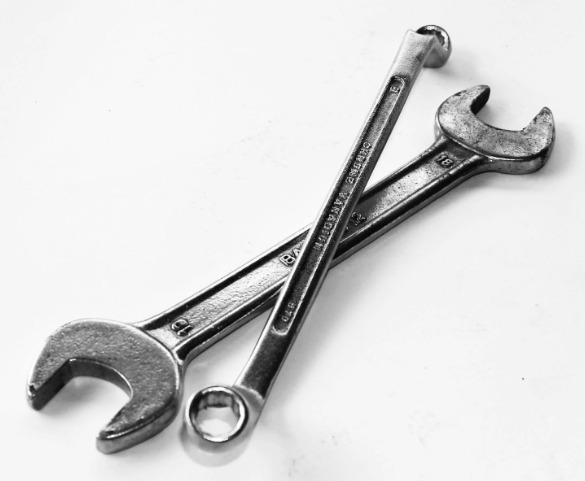
Mankind got unbelievable leverage with the creation of tools. Before somebody ever came up with the fulcrum, wrench, and related devices, people could not get leverage. They had to do things in a linear mode.
Afterwards, they could accomplish in one easy motion achievements that used to take ten (10) men, ten (10) hours.
This is the same dynamic you are subtly, easily and automatically creating by eliminating all your team’s negative factors, and replacing them with an awareness of how much more is possible.
By eliminating problems, we make changes that significantly reduce defects in a product, errors in shipments, long waiting times, etc. This does not guarantee your company’s success. However, reducing problems often has the side effect of reducing costs, thus improving value.
These changes typically lead to simplification and standardization of processes, better training, mistake proofing, preventive maintenance, etc. And;
A decrease in customer complaints, returns, excessive rework, high warranty costs, late deliveries, lawsuits, etc.
Win win win.
“Every problem carries within it the seeds of opportunity. The key is to shift your focus from the obstacle itself to the possibilities it unlocks.”
💙 Why Employees Love It:
Employees get deep fulfillment out of their work as long as they are allowed to think about it and improve it.

Intrinsic motivation and the desire to contribute is innate. We are born with it:
A tribe-like mentality that demands we add value as a means of our survival. Throughout the millennia, this has been our evolutionary standard. However,
This ability to serve and contribute is systematically restricted because our entire management ideology (over our whole life and career) suggests that management knows best.
Through training and enforcement, we are held accountable to “scientific management” standards stemming largely from Frederick Taylor’s approach in the 1850’s. While profound at the time, this “Standardization” is no longer as effective as it once was. The world has changed.
And continues to evolve.
To flourish in these uncertain times, to transform into something greater, you must appreciate:
It is human nature to want to improve one’s environment. This is a given. When companies get in the way of doing this, it is terribly demotivating: For everyone involved. The result is a lack of innovation and cultural decline. What does this look like?
🥀 Risk of Demotivated Staff:
According to the latest research, demotivation is evident through:
📉 Declining Employee Happiness.
- Gallup’s 2024 State of the Global Workforce report indicates that global employee engagement has declined from 23% to 21%, with the UK notably low at just 10%. Manager burnout and insufficient support are major contributors to this disengagement. Financial Times
- BambooHR’s Q2 2024 data shows that employee satisfaction hit a new four-year low, reversing a hopeful spike in Q1. BambooHR
😞 Rising Disengagement and Stress
- Gallup’s research highlights that 44% of employees experienced “a lot” of stress at work the day before they took the survey, marking a historic high. KSBY News
- Gallup’s “The Great Detachment” report notes that employees are seeking new job opportunities at the highest rate since 2015, with overall satisfaction with their employer returning to a record low. Gallup.com1
🧠 Understanding the Causes
- Harvard Business Review identifies four traps leading to employee demotivation: Values mismatch, lack of self-efficacy, disruptive emotions, and attribution errors. HBR on LinkedIn
- Business Insider discusses “boreout,” a phenomenon where employees feel disengaged due to monotonous tasks or lack of meaningful work, exacerbated by remote work and inflexible return-to-office policies. Business Insider
“The most powerful drive does not come from pressure or praise. It comes from purpose. Intrinsic motivation turns work into meaning and effort into fulfillment. When people find internal value in what they do, they bring more creativity, resilience, and commitment.”
👏 Benefits to Employee (continued):
Through a Process Triage workshop, they are being Heard. Engaged. Valued.
This process gives them a safe environment and the opportunity to voice their concerns and suggestions: The proper context to create, improve and solve the problems that are afflicting them on a daily basis.

Process Triage is a method for releasing their intrinsic motivation and allowing them to participate in the success of the organization, in which they are heavily invested:
Your staff is investing a major portion of their waking life, dedicated to your company. They are hoping this job is one they can passionately pursue. They want to serve and contribute. This is innate. We are born this way. We are wired as a tribe-like species that relies on relational capital for our very survival. If they secretly despise your company, lets’ get at the root cause.
Rosie Rosenberger notes how 20% of his process triages result in tears of joy. Most the pain points employees suffer is Recurring. Day in and day out: The same issues abound.
When other people in other departments are feeding into that pain, or creating friction earlier in the process, they also get a feeling of empathy.
Now they have to look somebody in the face and say, “What do you mean 90% of the time my paperwork isn’t good?” They often respond, “Wow, I didn’t know that…” Triaging brings an incredible level of clarity.
When we go through these pain points that have been identified, placed and plotted on the process map, you find other people struggling with the same issues.” This leads to a sense of camaraderie and empathy. You no longer feel like you are alone. This provides hope and inspiration.
So as they walk through every bit of the process map, they not only show the process to the other teams (this helps everybody understands the entire outcome the organization is trying to achieve), they also talk about the pain they are having between departments.
When employees show up for work, all they want is to be treated like human beings. Like actual human resources rather than cogs in a wheel.
All we are doing is encouraging the frontline voices who make the product, deliver the service, and face the client; to make it better.

💰 Bottom line:
- People are born with a desire to learn, and they learn in different ways and at different speeds.
- People are intrinsically motivated to serve a meaningful purpose: to do work they are proud of (Quality) and have control over.
- People will embrace that change when they can be a part of it.
- People tend to embrace and work on things they care about, the things that make them feel good about themselves and generate genuine interest for them.
- Working with a team to improve one’s job where ideas are considered and used, creates satisfaction.
“When you treat employees with respect, you get more than compliance, you unlock commitment. Empowered people do not wait for permission; they take ownership and create value.”
❤️ Why I love it. My Reason Why:
Triaging is where I find my 3Ps: Passion, Purpose and a sense of Possibility:
We live in the entrepreneurial capital of the world. Yet, 70% of our business fail? The remaining “Successful companies” treat people like garbage. This restricts American Quality and Innovation. Everyone suffers.
Our cultural belief system is based on the antiquated idea that “human resources” are equivalent to disposal, interchangeable machine parts.
We treat people like numbers. Even now, our financial statements generally label us as a cost, an expense, a liability.
Great thinkers suggest the Core Purpose of business is to Leverage People. Through Process Triaging I want to help you discover the connection no one else sees: The human potential.
At the time of this writing, this triaging method appears the quickest, most expedient way to shed light and remove barriers restricting human capital. I liken it to eye opening, overnight, breakthrough innovation.
Is there a better method for unleashing human potential? If so, tell me about it, because I am insatiably curious and hungry to discover it.
🧭 My Aim:
To have fun, to learn, to work together, and make a difference.
To accelerate the pace at which organizations improve. And to reduce the chance this improvement will be a short-lived experience.
For EVERYBODY to Gain: Stockholders, employees, suppliers, customers, community, the environment, over the long run.
🌟 My Why Statement:
It is human nature to improve one’s environment. As such, I believe every business should focus on continually improving their product and service. This means EVERYONE in the company, AT ALL TIMES, should be working together to accomplish this aim.
The first step is driving out fear: Encouraging people directly involved in product development, the opportunity to diagnose operational pain, prioritize what matters, and own the solutions… To expose system variation, remove barriers to performance, and let teams focus on meaningful work. This is Human Flourishing: Turning operational pain into progress. Creating clarity, accountability, and momentum.
Continual Improvement is a way of thinking. To be designed with intention.
To do otherwise is to fall behind: A disservice to community.
🤝 Why Work With Me:
It’s not me, it is Deming, Derrick and most of all: Your People. They hold the answers.
While I have the passion, purpose and sense of possibility to lend support, the real question is:
What do you know about Deming, Derrick and your people? My hunch: “Not enough!”
- W. Edwards Deming is the father of Process Improvement. Yet, here in the U.S. we tragically ignore his work. We do the opposite of what he advises. Yet, he is responsible for the American Quality Revolution, the Japanese Economic Miracle, our victory in WWII, a scientific method for process improvement, and a 1000 other hidden turning points in our history. Deming often asked the question, “By what method (will you achieve that goal)?” Start with Triage I say! He shares profound knowledge that I cannot recommend enough.
- Derrick Mains: Has spent the last 20 years in process improvement, refining his process, educating people like myself. He is a gifted speaker and advocates Deming. That’s how I discovered “The Process Fixer.” He now owns and certifies (your) people in the Process Triage method. He has books, training material, a podcast among other platforms.
- Your staff: They are Volunteers. Not that they would work without pay, but they could get a job at any number of other places. They could be doing anything, yet they are choosing to work with you. Have they made a wise choice in choosing your company? Is there mutual trust and respect? Do you feel a responsibility to offer more than a simple paycheck in return? Do their contributions really matter?
🪶 For What It Is Worth:
I think Process Triage® is a wonderful idea. I am not forcing it on you. Nor am I begging you to do it.
My purpose in life is to find a better way and share it. Hence this long-winded webpage. Ultimately, I am hoping to bring a right way of getting predictable results.
I am no one special. I am not trying to get rich and famous. All I want is a modicum of joy in my work. Hopefully a few raving fans and a product that sells itself.
I am a researcher. I am curious and hardworking: An impulsive finder of truth.
I frequently daydream and obsess over efficiency, optimization, breakthrough innovation, making a difference, overnight turnarounds, Quality as a strategy, transformations, human flourishing, etc. As such;
I am committed to making the process triage workshop the most usable, profitable, predictable and powerful money maker, wealth creator, business builder and profit improver you have available to you.
Remember: I just want to help. You are the one who has consciously made the decision to invest your whole life, perhaps the fate of your family and the fate of all kinds of other families, who directly or indirectly depend on you. You are the one who has your house mortgaged. You are the one who has to get up every Monday morning and be there to open the door. You are the one who has to make payroll and clear the bank. You are the one who has your name on the line for the real estate. This is why I say you owe it to yourself to do a few things:
- Get the greatest yield out of everything you do
- Get the greatest joy out of every hour you spend
- Give the greatest value you can not only render, but that can be perceived, by creating the most extraordinary vehicle you can build; giving you, your people and your community the most exceptional benefit they deserve
Whose process are we are trying to improve? Is it yours or mine?
The system I want to give life to is not mine: It is yours. I am not the one who has committed 24/7, my future, what defines me, my self-esteem, my financial security, my fulfillment, my children and family’s well-being to the enterprise. You are. I am just the one who is trying to make that commitment better. I am the one who wants to help you make what you are doing perform better and be less episodic. Like any animal, I can lead you to water but I cannot make it drink it. The best I can do is provoke you positively and hope to show you how you have the world by its breast. Since my effort is useless if you do not initiate. Look:
If you’re like I was, when opportunities like this come along, you’re thinking there’s another opportunity right behind it, and that’s just not true. So really look into your heart and if you’ve been missing opportunities because you don’t jump on it, this may be the time you should jump on it right now, because yeah, maybe this website will still be here tomorrow but you’re not going to remember where it is, so many things are going to happen and somebody else will get your attention. So right now while you’re here, while you’ve got the time, reach out and see what’s going on. Let me know if and when you are thinking about having a workshop. There is nothing to be afraid of. I have a simple philosophy:
I believe we are rewarded in life in direct proportion to the quantity, quality and consistency of not just breakthroughs we create but of the problems we solve for others, of questions we answer and opportunities we make possible. I believe you must earn your rewards through serving others. I want to help you and your clients (both the people you pay and those who pay you). I also believe:
You should never steal from yourself. If you are going to commit your life to an enterprise, wealth creation, the security and the financial well-being of your family… and if other people (your staff, your team, your employees, your vendors) are going to commit their lives to you, you owe it to yourself and to everyone else to get the highest and best results. You should never accept a fraction of the yield when; with the same effort or less, the same people or fewer, the same time or less, the same capital or less, the same opportunity cost or less; can deliver so much more to you currently, and perpetually.
My goal is to animate your spirit with a greater sense of possibility, passion, purpose and profitability. I want to make all your sales, marketing and communications produce multiplied impact, results and stature. And, I want to see you multiply your sales results, while working less. The greatest question I can think to ask: How are you leveraging everyone else’s knowledge base?
Peter Drucker claims “If you are not committed to making your current thinking in your current business and your current approach obsolete, you can make certain your competitor is committed to doing it to you and for you, so you might as well do it to yourself first. The world is too competitive for you to sit still. If the approach you are using is the exact same approach everybody else is using, what do you imagine is going to give you any advantage or growth?
I do not believe in reactive thinking, but proactive thinking. This is based on understanding other possible alternatives, understanding the available superior performing resources, understanding that you have not been sentenced to a life of continuing doing what you are doing, the way you are doing it with the limited knowledge with which you have been doing it. You have permission to escape the jail you have sentenced yourself to. It is all you; not the world. There are so many better, easier, more powerful, profitable ways to operate the rest of your entrepreneurial life.
It is tragic to accept a fraction of a fraction of a fraction. Most small entrepreneurs limit, restrict and impede the number of clients they could be generating, the size of the sale they could be getting, the degree of trusted, bonded, long-term connections they could be getting or creating, the repeat business they could be getting, all of the additional sources of revenue they could be generating…
Let Process Triaging open doors for you. I can run 1000 workshops and no two will be identical. Think different. Leverage your people:
🚀 My Aim:
I want to play a different game. I aim to be your most trusted advisor for life. I shall give you the recommendations I think are in your best interest. I do not sell you more than you should have, I do not sell you less. I tell you why I think you should do things. I give you perspectives I think with all modesty are very different and insightful and strategically more meaningful. I believe I approach everything different. I revere you and your purpose different. Honestly, I think our outcomes are superior.
While I might knock it and poke fun and despair at the downside of American industry and its mediocrity; I admire the whole field, especially the private sector. I just want to improve it, taking it to the next level. I am pushing for its natural evolution today, not tomorrow.
I am getting into this game because I feel I can add a lot of value to you. If you deal with me, I believe I am approaching it totally, diametrically and I think far more comprehensively, holistically and meaningfully than anyone else. I aim to play at a more elevated level of understanding. A more sophisticated level of outcome. A more deeply committed and connected level of relationship. A much loftier level of responsibility and commitment and outcome expectation.
My aim is to differ from all the rest. Seeking preeminence, I aspire to be better at what I do for you. I am sure all people are really great at what they do, yet I yearn to approach your fate and financial path with a much greater commitment to getting you there quickly, easily, safely, and more enjoyably and more predictably than any of our competitors. I protect your downside better, multiply your upside more and show you more ethical shortcuts, quick fixes and fast track strategies that you can use.
If you have a goal of improving your profit, your performance, your success, your effectiveness, your richness of relationship, you cannot do it by hoping and wishing. All you have to do is identify the various processes you currently use to do whatever it is you do, or to accomplish whatever it is you accomplish; making it visible, then breaking it down to the simplest identifiable level; and then work on improving each facet. It is that simple. This is why I love the idea of mapping with a structured dialogue. In the process;
I am hoping to help you continually grow your profound knowledge, grow your sense of discovery, grow your interest in others, and grow your thirst for knowledge that you can use to combine in new, innovative possibilities to render even greater and higher, and more valuable service to others. Most of all, I am hoping you live for making other people’s lives better because you are in it. As Danny Meyer (in his book Setting the Table) suggests;
🍽️ Hospitality:
This is a means to help one another succeed.
If your aim is to extend meaningful hospitality to your client, your staff members need to first understand the primary importance being on each other’s side. Mutual respect and trust are the most powerful tools for building an energetic, motivating, winning team.
The most talented employees are often those attracted to companies that can provide them the most important job benefit of all: Other great people with whom to work.
Considering that most of us spend about one third (1/3) of our lives at work, it is the value of the human experience we have with our colleagues, what we learn from one another, how much fun we have working together, how much mutual respect and trust we share, that has the greatest influence on job satisfaction.
“When I (Danny Meyer) talk about staff caring for each other, I stress that it is incumbent on all members of the team to be citizens of the company and to come to work looking for opportunities to be on one another’s side.”
Does working together take more effort than screaming and yelling? Not especially. But the results of respectful collaboration build long term success and prevent the same problems from recurring every day.
When there is abundant mutual respect and trust, people are continually looking for opportunities to help one another. This infectious spirit then becomes culture. This reciprocally uplifting feeling then translates into a better product because managers help production workers, production workers help managers; everyone is helping one another.
What people want most from their workplace is to respect and be respected. Is there a better way to inspire standards of excellence?
You want to run a business where people will work for you because they want to. If you do, you will become a destination employer; where all your competitor’s best people apply when you post a job opening. Your company will become the place people aspire to work at. To do this;
You need to promote your people from soldiers to scouts. In her book The Scout Mindset: Why Some People See Things Clearly and Others Don’t, Julia Galef discusses how in most our organizations, we operate like military operations with a sea of soldiers defending our kingdom and ideology;
Noting how we have very few scouts that have the authority and autonomy to feed us intelligence, update the maps, and provide insights from the frontline (the place where your business daily interacts directly with your actual customers):
By empowering employees to operate as scouts gathering critical information that influences the ongoing design and symbiosis of the system, you come to realize;
People work for one of three reasons:
- Fear
- Finance
- Because they want to: Where they feel inspired, empowered, and valued…
Make your organization a place where people choose to work, and they will bring their best selves every day.
“Empowered and well-trained employees are the heart and soul of delivering outstanding customer experiences.” John Zimmer, Co-Founder of Lyft
🙋 Objections:
Most Common Executive Objections to Doing a Process Triage:
- Halt production: “We can’t afford to pull people off the line for a whole day.” How are we going to shut down operations just for a workshop?
- We are pausing operations for a day, to improve it permanently. One day of downtime to eliminate recurring problems could save us weeks of future delays. The people closest to the work have the best insights; we need them present. If necessary, we can rotate people or split across shifts to minimize disruption.
- I completely get this concern: Pulling your top people off the line for a whole day feels like a hit. But here is the trade-off: This day is about getting your team’s ideas on paper so we can fix what is slowing them down. We have seen that this one-day investment pays back fast; in reduced rework, shorter lead times, and fewer headaches. If needed, we can align the day with a lighter workload or split it into shifts. Though, it is critical we get their insight to improve the very system they run.
2. No time: “We don’t have time for this.” Our team is busy and a triage will slow down operations.
- A triage saves time. It is a fast, structured way to fix the highest pain points quickly, without adding meetings later to clean up preventable mistakes. If we do not fix the root issues, we are going to keep paying for chronic time wasters (rework, delays, miscommunication).
- I hear you. Your team is swamped. Asking for a full day feels like a big ask. But the reality is: The reason they are swamped is because we have not stopped to fix the stuff that slows them down. If we do this right, you get hours back every week, per person. Let’s find the least disruptive date and make this the turning point, not another delay.
3. All talk: “It sounds like a lot of meetings and no action.” We are not interested in “talk shops” without tangible results.
- The output is a prioritized action list, not theory. Each item is owned by someone, with deadlines. This is not just a ‘discussion’ or a workshop. This produces a ranked, realistic list of fixes that gets acted on immediately. You are going to end up with a Process Map, ranked pain points and an action plan, with a timeline. This drives real change because it is built around the people who live the process, rather than outside consultants.
- I get it. You have probably been through meetings where everyone talks big, and then nothing changes. But Process Triage is different: It ends with a prioritized action list, clear owners, and commitments. It is not theoretical. People walk out knowing what to fix, who is fixing it, and when. Then we follow up. This is not a retreat. It is a work session that kicks off real improvement.
4. People Problem: “Our processes are fine. It is our people who are the problem.” Ours is a talent or discipline issue, not a process issue.
- Strong processes make even average teams perform better. Great people trapped in bad systems fail every time. This is not about blaming people. It is about fixing the process so good people can succeed. We assume people are good. If there are consistent problems, it is because the process is broken, unclear, or overloaded. As Deming clinically proved and validated: 94% of problems are due to the system, not the people. What is getting in your team’s way? Where is the process setting them up to fail? How can we make it easier for them to win?
- I want to be clear: This is not about pointing fingers at your people. It is the opposite. Process Triage is based on the belief that your team wants to do great work. They just need a better system to do it in. Again, we assume your people are good. If things are breaking down, it is because the process is the real problem. This gives your people the tools to identify those breakdowns and help fix them. This is a chance to protect your team from frustration, not criticize them.
5. Too Expensive: It is too expensive.” This is a consulting service with high fees.
- Compared to the cost of mistakes, rework, and missed revenue, triage is cheap. Plus, it offers permanent impact. This is not a cost. It is a way to stop recurring waste, delays, and rework that are already draining your budget. In most triages, teams identify 15–30 process defects. Fixing just a few often pays back the full cost in 30–60 days. How much are you spending on patching recurring issues, working overtime, or losing customers to slow service?
- It is fair to ask about cost. However, in most companies, the waste we uncover in a single triage session far exceeds the cost of running it. You are not just buying a workshop, you are buying faster throughput, less rework, better morale, and a framework you can reuse. If we do this right, it pays for itself in weeks.
- Based on Lean, Theory of Constraints, and real-world case studies, the typical ROI from a well-run triage is 5–10X the effort invested, especially when paired with follow-through.
6. Failed Before: “We’ve already done process improvement before and it didn’t work.” We have bad memories of failed past efforts.
- This is not a traditional process improvement program. It is fast. It is inclusive. And it is led by your own people, not outsiders telling you what to do. A lot of improvement efforts do fall flat, however, the Process Triage is built differently. You get structured mapping, an internal team driven action fix list with clear owners and timelines. Every issue identified in triage is ranked, assigned, and tracked, giving you a clear objectives.
- I understand. If you have been through process improvement exercises that did not stick, I would not be excited about another one either. But Process Triage is not a big visioning session or a consultant show. It is a working session run by your people. We do not make a long wish list. We build a focused, ranked action list with owners, timelines, and follow-through. If it does not produce traction quickly, do not do it again. But give us one shot to prove just how different this can be.
7. Expose Dysfunction: “I don’t want to expose internal dysfunction.” We are nervous that a triage will highlight problems that could reflect badly on us and our leadership team.
- It is better to see a crack now than a collapse later. The goal is a safe environment focused on solutions, not blame. Every growing business has dysfunction. Process Triage just makes it visible so we can deal with it, rather than hide it. Remember; you cannot fix what you cannot see. Strong leaders do not hide dysfunction, they fix it. We are not here to assign fault, we are here to fix the system causing the pain. Avoiding dysfunction does not make it go away. It just makes it more expensive, more painful, and more dangerous over time.
- It is completely natural to feel uneasy about what might come up in a triage session. But the goal is not to shame anyone. It is to shine a light on things the process is doing to your people, not because of them. Every growing business has friction. What makes a team world-class is how quickly they deal with it. We will run the triage in a way that is respectful, confidential, and focused on fixing systems, rather than blaming people.
8. Known Problems: “We already know what the problems are.” We have enough information.
- Triage surfaces not just the obvious issues, but the root causes. Often, teams think they know, but discover key bottlenecks they missed. Even if you do know all your problems, Process Triage helps you turn that knowledge into organized, actionable, team-owned fixes, not just discussion. Most teams think they agree on what is broken, but when we map it out and force a ranking, the alignment gaps become obvious. Triage is how you move from knowing to agreeing, prioritizing, and executing together. This is a treatment plan: The team walks out with a ranked list of fixable issues, assigned owners, and next steps. Even if everyone knows the issues, triage makes the pain visible, gets buy-in, and energizes the team to act. It replaces passive frustration with shared commitment. If you already know the issues, then Triage will be even more efficient. Now we can finally start fixing.
- You are right: Most companies already know a lot of their process problems. But knowing is not the hard part. Agreeing on which ones matter most, prioritizing them, and actually fixing them is where most teams stall. Process Triage gives structure to that step. If we already know the issues, great. This means we will move even faster to solutions, accountability, and momentum.
9. Control: “I don’t want to give up control.” We fear being exposed, losing authority, or breaking a fragile balance in how things run.
- Process Triage does not take away control. It gives you control: Better control, because it reveals what is really happening. It exposes facts, not opinions. While you must still decide which improvements to act on, you retain the authority to approve actions, assign resources, and set timing. Control is about visibility and predictability, and this process gives you a clear map of where the risks are, and what is breaking down.
- This is not about taking control away. It is about giving you a sharper picture of how your team experiences the work. And finding fixes that align with your goals. You still decide what changes happen and when. What triage does is make those decisions easier and safer, because they are based on what is actually happening, not just what we think is happening.
10. No Experience. “You have not done 50 process triages.” We don’t want to risk it not working.
- You are right. As of 06/04/2025 I have not yet facilitated a process triage. This is exactly why I am seeking certification, and gauging your interest. Even though I can make a flow diagram, I believe in learning from structured, proven methods rather than guessing my way through. My lack of prior triage experience means I will be fully committed to doing it the right way, not the way I think it should be done.
- While I have not led a triage yet, I have spent time studying systems thinking, Deming’s principles, continual improvement, Lean Six Sigma, User Experience Design, Business Process Improvement, Statistical Process Control, Quality as an Organizational Strategy. I am smitten with this process because I understand how critical it is to engage front-line experts in identifying root causes and designing solutions together, and because of how quickly resolve is created. This foundation aligns perfectly with process triage.
- I am not just looking to get certified. I am committing to making this method a core part of how I help organizations. I see this as a long-term investment in helping businesses run better by engaging the people who do the work. By leveraging people. By advocating human capital. Supporting human flourishing. And how can you not be impressed by the speed in which bottlenecks are identified and eliminated?
- I may not have experience yet, yet I am fully teachable. I love learning. I believe knowledge is far superior to experience (a rant I will spare you). I want to apply the Process Triage method as intended, learning from experienced practitioners, and get feedback on how to continually improve. If I am not doing this in 30 years, it is because I found a better and quicker method for breakthrough innovation.
11. Terrible Sales Pitch. “Your sales presentation was awful and I don’t know that I can trust you or you ability.” You sounded like a bumbling idiot when we spoke.
- Yeah, I know. I have worked a wide variety of jobs. None of them were in sales. It will take me about three years of practice to master my verbal sales pitch. And right now I am at ground zero. My entire working career has been in service and operations, which actually makes me well suited to lead a process triage.
- First impressions are hard to overcome. If you can get past that hurdle and give me a chance to validate the power of mapping, I think you will be quite impressed. If you do not receive at least a 20% ROI in the first month, you have ever right to demand a full refund. However, I am confident you will be asking for more.
12. We Know our Process. “We have a process and everybody follows the same thing.” We already have a firm grasp on our situation.
- Are you certain? Have you actually mapped out your process step by step? Can you point to the page where it is? My guess: If you have mapped it out and discuss it, you would see tons of variation. People vary. Their scripts vary. Their actions and behaviors vary. Their reasons for varying performance vary… This is about facing reality and understanding the True current state.
- After mapping out processes, a couple people will pipe up and then someone inevitably goes, “Well, no, wait a second, that’s not what we do. What we do next is X, Y or Z. I mean, it’s…” “And that happens over and over and over again with this with this process. It just seems to be a part of it. It’s not a bug. It is actually a feature of this mapping exercise.”
- Many people try to solve these problems by just jumping in rather than taking the time to really, truly and fully understand and appreciate their current state. The risk for the action taker when jumping in: They start blaming people for things that are not going right.
- One of the main objectives in the business process is to reduce variation. Variation is present. If you disagree, may I suggest this is a hypothesis worth testing.
13. Virtual Triage. “We are interest in Process Triage, but only if we can do it remotely over Zoom.” We don’t want to come into the office to do this.
- You really need to stand up against the wall and get some shoulder friction standing together, placing out your bubbles in circles or bubbles in lines, stepping back, looking at it, going back up saying, what if we did it this way? What if we did it that way? We always do these things in person because it requires us to stand there together and to see the problem as the system, not as the individual person or the resource constraint they are experiencing.
- This is about camaraderie, cooperation and teamwork. Staring at each other face-to-face in a confrontational manner over a Zoom meeting does little to engage our limbic system. Standing shoulder to shoulder, however, creates a sense of safety and trust. This is our evolutionary approach to collaboration. Through neuroscience we know that this process is most effective in engaging our core limbic drivers. Shoulder friction taps into our natural desire to belong and contribute, rather than respond with defensiveness or withdrawal. For this reason, for Quality assurance, we insist on mapping in person.
14. Proposal List. “Will we like the proposals list?” What if the list of improvements are too few, too many, or too expensive?
- You will appreciate the list of proposals. Your team will identify the top 80% of bottlenecks. We then provide a best practice guide rough draft to write the Improvement Implementation Plan. Then, your process manager writes the final copy that determines who is on point for each improvement, its due date and any resources needed.
- If resources are not available, the proposal will be flagged and submitted to you with estimated resources needed. Process triaging provides a way to seek funding for improvements that have a strategic fit and bottoms-up team buy-in.
- The size of the list of proposed improvements is generally sufficient for the team to tackle. Even working just part of the list can bring benefits while you determine a more disruptive, game-changing alternative.
🛡️ Guaranty:
There are many premium services out there to help you get all the things you want. They are very good for what they are. However, they cost many times what my service costs. If you can afford them and you can afford the services that go along with them, I encourage you to do it. But if you cannot, I am a perfect solution because I give you the basics, I stand behind it, and deliver a consistent, dependable, quality result. I am a wonderful advisor to get you to the next level in the most cost effective, safe, productive and profitable way.
My “Clarity & Control” Guarantee:
Go through a single Process Triage session with your team. If you do not walk away with a crystal-clear map of your core process, a prioritized list of actionable fixes, and team alignment on what is really holding you back, I do not deserve your money. Since I am no criminal:
If you do not feel that our process triage has given you better control, clarity, and concrete momentum, you do not pay a dime.
Most companies waste months guessing what is broken. In less than a day, you will know exactly what to fix, in what order, and who owns it.
If we cannot deliver on that promise: If you and your team do not gain that level of clarity, alignment, and team buy-in, you owe me nothing.
If we do not identify and come up with an action plan to resolve 80% of your biggest challenges, bottlenecks and problems… If our service does not improve your operations, making you at least 20 percent more effective, if your team is not glowing with enthusiasm and excitement, if I fail to ignite vigor, prosperity and hope for you and your frontline staff, if I fail to deliver as promised; then you have every right to ask for your money back.
Not only will I return every dime, I will also throw in lunch for every participant in the workshop as my way of making sure you do get some value from my services.
No results. No risk. No regrets.
🧑🏫 What to Expect During a Workshop
When ready, here is your sneak peak of your workshop:
Step 1: Right off the top we explore Systems Thinking:
It is critical everyone grasps the importance of this mindset. Instead of blaming people for problems, we help teams see how work flows (and where it doesn’t).
Every outcome is the result of a system, whether by design or by default. By stepping back and viewing the entire process as an interconnected system, teams can begin to spot hidden bottlenecks, recurring friction points, and breakdowns in handoffs.
This shift in perspective is critical: It transforms reactive problem-solving into proactive improvement, and it lays the foundation for a triage session that identifies real leverage points for lasting change. Once we knock this out;
Step 2. We clear the fog away with Process Mapping:
This is where the real clarity begins. In a highly visual, collaborative exercise, frontline team members map out each step of their work with laser-like focus (as it actually happens, not as it appears in a policy manual).
This map becomes a shared language and single source of truth, revealing where things flow smoothly and where they break down. It exposes delays, confusion, rework, and handoff failures that drain time and morale.
By the end of this step, everyone sees the process clearly, often for the first time, and agrees on where the problems truly lie. Armed with this chilling detail, we move on to;
Step 3. Now, faster than you ever dreamed possible, we identify Bottlenecks and Pain Points:
The team votes on the major, systematic flaws. These are the friction points stealing productivity, increasing errors, and eroding morale: The handicaps slowing things down, falling through the cracks, and causing frustration.
Because this step is driven by the battle-hardened people who live the process every day, the insights are grounded, honest, and immediately actionable. Rather than jumping to vague or top-down solutions, the team pinpoints specific constraints in the system. We isolate for solution the top three pain points crippling speed, quality, and productivity.
This step turns the invisible into the undeniable, and sets the stage for targeted, practical improvements:
Step 4: Now we shift into treatment mode: Map and Remedy:
Once the priorities are clear, we drill down, further collaborating, mapping out the problematic processes; ultimately making them obsolete through a targeted list of improvement recommendations.
Each issue is documented on a visual action board capturing what is broken, missing, and unclear. The team classifies each issue by how it should be addressed; fix now, fix later, investigate further, or escalate to leadership.
This creates a clear, prioritized roadmap for improvement: A practical, no-fluff action plan built from the ground up, ready to execute the moment the session ends.
Note: You can use Discovery Day as a powerful standalone improvement initiative, which is perfect for teams seeking quick wins without long-term commitments.
Many clients make this a recurring event, running one each quarter to keep a pulse on frontline realities while tackling emerging challenges before they grow into bigger problems. This is an efficient, high-impact way to continually improve without overwhelming your team.
Now, if you are looking for deeper, sustained transformation, consider integrating Discovery Day into our M4 Package: A comprehensive engagement built around the four core drivers of operational excellence: Mapping, Managing, Measuring, and Mobilizing.
In this package, Discovery Day becomes the launchpad for a strategic improvement journey, linking process clarity with leadership alignment, team capability building, and real-time execution support.
This is ideal for organizations serious about embedding continual improvement into their culture. This becomes more than fixing what is broken. It is about raising the bar across the board.
🎬 In Closing:
For many of the largest companies on the planet, it is quite normal for them to spend time and money integrating vendor and subcontractor processes, bringing teams together to map out the relationship, hand-offs, pain and accountability within their system… Making one, two or three day investments to assure that everyone is on the same team. Do you do that? When will you?
Unlike conventional methods that often lead to confusion and workflow entanglement, process triage provides a lucid visual roadmap of tasks, responsibilities, and workflows. It is not merely about drawing lines and boxes, it is about comprehending task workflows and pinpointing bottlenecks that impede productivity.
For organizations seeking to streamline operations and avoid miscommunication, grasping the essence of process mapping could be the ultimate breakthrough you need.
(This is just the beginning of marvelous and unique adventure)